Case type Personal Injury
Swimming Pool & Drowning Claims
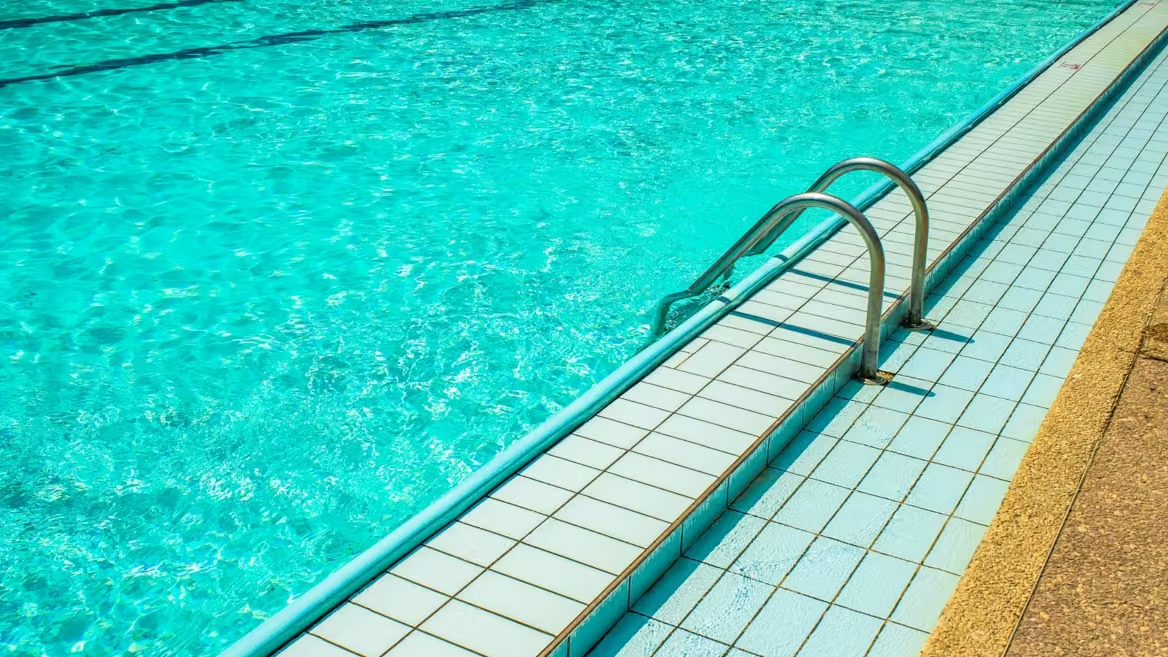
Someone you love was pulled from a pool, or did not come home, and you are left with questions no family should have to ask. Tell us your story.
We hear from parents, spouses and survivors after drownings and pool injuries at homes, hotels, apartment complexes and public facilities. CBW Law reviews what happened, who controlled the pool and which safety rules applied, and explains what the records show. Tell Us Your Story. Contacting us does not create an attorney-client relationship.
Drowning happens in seconds and is often silent7. It can happen even when children are not expected to be near water, such as when they get into a pool unsupervised5. When a child or adult is hurt or lost in a pool, families often want to know whether a gate, a drain, a cover or a missing rule played a part. A drowning does not, by itself, prove that anyone was negligent. A swimming pool accident lawyer looks at who controlled the pool, which safety rules applied to it, and whether a failure to follow them helped cause the harm.
What drowning means, in medical terms
Doctors and public health agencies now use one definition. Drowning is the process of having trouble breathing because the nose and mouth are under water or another liquid1. Under that definition, drowning is not always fatal. A fatal drowning ends in death. A nonfatal drowning means the person survived, with outcomes that range from no injury to brain damage or permanent disability1.
This definition came from an international consensus process published in the Bulletin of the World Health Organization in 2005. The experts agreed that outcomes should be grouped as death, lasting illness or injury, or no lasting harm. They also agreed that terms such as "dry," "wet," "silent" and "secondary" drowning should no longer be used2. The older phrase "near drowning" still appears in some medical writing, but researchers who track drowning terms count it as non-uniform terminology3. You may still see the older words in a chart or a news story.
Nonfatal drowning can change a family's life. Researchers studying children hospitalized after drowning describe it as a leading cause of brain injury in children, and say long-term outcome data for survivors are limited4. If your child survived with lasting effects, our page on traumatic brain injury may also help.
What the data show
- Deaths each year
- CDC reports an average of 4,083 unintentional drowning deaths a year in the United States from 2012 to 20211.
- Young children
- More children ages 1 to 4 die from drowning than from any other cause, and most drownings in that age group happen in swimming pools15.
- Pools and spas
- CPSC reported 379 pool- or spa-related drowning deaths of children under 15 in 2023, and an average of 376 a year from 2021 to 2023. Nearly 80 percent were under age 56.
- Where they happen
- From 2021 to 2023, over 70 percent of these child drownings happened at a home, such as the child's own home or the home of a relative, friend or neighbor6.
- Nonfatal drowning
- CPSC estimates an average of 5,900 pool- or spa-related nonfatal drowning injuries treated in emergency departments each year from 2023 to 20256.
Where pool injuries and drownings happen
Pool cases arise in many settings, and the same duties do not apply to each one.
- Residential pools. CDC notes that drowning can happen when children gain unsupervised access to a pool they were not expected to be near5.
- Hotel and resort pools. Guests rely on the property to keep gates, drains, lighting and water clarity in order.
- Apartment and HOA pools. A broken latch or propped gate can affect many families.
- Public and club pools. City pools, schools, gyms and swim clubs may have staffing and supervision duties set by local codes or their own policies.
- Spas, wading pools and splash pads. Smaller bodies of water can carry drain and suction risks of their own.
- Above-ground and portable pools. In June 2026, CPSC pointed to a recall of about five million above-ground pools after child drownings linked to straps that could act as a foothold6.
Hazards a swimming pool lawyer looks at
Most pool claims turn on whether basic layers of protection were in place and working. CDC recommends a four-sided fence at least four feet high that separates the pool from the house, with self-closing and self-latching gates7. CDC also reports that a four-sided isolation fence cuts a child's drowning risk by 83 percent compared with fencing that only surrounds the yard5. Common problem areas include:
- Missing, low or climbable fences
- Gates that do not close or latch on their own
- Gates propped open or latches broken
- Doors or windows opening straight onto the pool
- Drain covers that are missing, loose or broken
- Cloudy water that hides a person below
- Missing depth markings or rescue equipment
- Poor lighting at night
- Ladders or furniture left where a child can climb in
- No one assigned to watch children in the water
Supervision matters too. CDC advises that an adult be assigned to watch children closely and without distractions such as phones or alcohol, and that adults keep watching even when lifeguards are present7. But no single rule fits every pool. Pool codes vary widely across the country, and they, not a general assumption, address matters like lifeguard staffing and training8. A claim review asks what the rules required for that pool and whether they were followed.
Does a drowning mean someone was negligent?
Several questions shape that analysis:
- Control. Who owned, managed or maintained the pool, gate and equipment on that day?
- Safety requirements. Which state laws, local codes, permits or industry standards applied to this type of pool?
- Notice. Did the owner or manager know, or should they have known, about a broken latch, a missing drain cover or a past incident?
- Causation. Did the hazard actually contribute to what happened, or would the outcome have been the same?
- Children's rules. Some rules focus on young children. Arizona's barrier law, for example, does not apply to a home where every resident is at least six10.
Arizona also uses comparative fault. If more than one person contributed to an injury, a jury can reduce damages in proportion to the injured person's share of fault9. That is a legal question decided on the facts, and it does not mean anyone is to blame for a child's death.
We treat every drowning as a family's loss first, and we look at the evidence before reaching any conclusion about fault.
Arizona pool barrier law and federal drain rules
Arizona has a statewide pool barrier law, A.R.S. § 36-1681. For many residential pools with water at least 18 inches deep and wider than eight feet, it requires an enclosure around the pool area10. Key parts of the law include:
- A wall, fence or barrier at least five feet high, measured on the outside10
- No openings large enough for a four-inch sphere to pass through10
- Self-closing, self-latching gates that open outward from the pool, with the latch at least 54 inches above the ground or on the pool side of the gate as the law describes10
- No handholds or footholds on the outside that a child could use to climb10
- If the house forms part of the enclosure, another protection such as a four-foot barrier between the house and pool, a motorized safety cover, or self-latching doors and window latches10
The statute has important exceptions. It does not apply to public or semi-public pools, to pools built before the law took effect, or to a home where every resident is at least six years old. It also does not apply in a city or county that adopted its own barrier ordinance before the state law, or a later one that is equal to or stricter than state law10. The local rule where the pool sits may control.
Public and semi-public pools follow a separate system. In Maricopa County, operating permits are required for public and semi-public pools, but not for private residential pools11. Federal law adds a drain safety rule. Under the Virginia Graeme Baker Pool and Spa Safety Act, signed December 19, 2007, drain covers must meet a national entrapment standard, and every public pool and spa must have anti-entrapment devices12. A public pool or spa with a single main drain that can be blocked needs at least one more protection, such as a safety vacuum release system or automatic pump shut-off12. The Act's definition of a public pool includes pools for residents of apartment complexes and patrons of hotels12. Breaking one of these rules does not automatically decide a claim, and following one does not end the question.
Who may be responsible for a pool injury
Depending on the facts, responsibility may involve one or more of these parties. None is presumed responsible.
- A homeowner or tenant who controlled a residential pool
- A landlord, property manager or homeowners association
- A hotel, resort or short-term rental owner
- A city, school district or other public entity that runs a pool
- A pool service or maintenance company
- A builder or fence contractor who installed the pool or barrier
- A maker or seller of a defective drain cover, pool, ladder or cover
Pool cases are a type of premises liability claim, and some also involve product claims.
Evidence in a swimming pool accident claim
Gates get repaired and video is overwritten, so records can change quickly. Maricopa County posts public pool inspection reports online and keeps them available for three years after the inspection date13.
Records that can help
The scene
- Photographs and video of the pool, fence, gates, latches, doors and drain covers
- Surveillance or doorbell camera footage
- Names and contact details of witnesses
- Pool rules, signs and posted hours
Official records
- Police, fire and 911 records
- Incident reports from the hotel, apartment complex or facility
- Health department permits and inspection reports
- Building permits and barrier inspections
- Medical examiner records in a death case
Medical and loss records
- Emergency, hospital and rehabilitation records
- Therapy and school records showing changes after a nonfatal drowning
- Bills, insurance statements and records of missed work
- Funeral and burial costs
Injury claims and wrongful death claims
When someone survives a drowning or pool injury, the claim belongs to the injured person. For a child, a parent or guardian usually acts on the child's behalf.
When someone dies, the law treats the claim differently. In Arizona, a wrongful death claim may be brought when a death is caused by a wrongful act, neglect or default that would have allowed the person to sue had they lived14. The claim is brought by the surviving spouse, child, parent or guardian, or the personal representative, and either parent may bring the action for the death of a child14. Our wrongful death page explains more.
When to talk to a drowning accident attorney
You do not need answers before reaching out. A drowning accident attorney can look into what happened while you focus on your family. Pool claims are one part of our Arizona personal injury work. Reasons families call include:
- A child got into a pool through a gate, door or fence that should have kept them out
- A drain, suction outlet or broken cover was involved
- The pool was at a hotel, apartment complex, HOA or public facility
- A lifeguard or staff member was on duty and you have questions about the response
- A public entity may be involved, because special notice deadlines may apply
Filing deadlines for pool and drowning claims
Deadlines in pool and drowning claims can be short. In Arizona, most personal injury claims must be filed within two years, and a wrongful death claim generally within two years of the death15. When the injured person is a minor, Arizona law generally does not count the time before the person turns 18 toward that limit16. If a city, county, school or other public entity may be responsible, a written notice of claim must generally be filed within 180 days, and a lawsuit within one year17. Other states set different deadlines and exceptions.
What happens after you contact CBW Law
Our process
-
We listen
You tell us what happened, at whatever pace feels right. We understand these conversations are painful.
-
We look at the facts
We review the information you share and identify the records that matter, such as photos, reports and inspection history.
-
We explain the rules
We explain which laws, codes and deadlines may apply to the pool involved, and what they could mean for a claim.
-
You decide
We give you a clear view of your options. Whether to move forward is always your choice.
Plain English
Medical, Health & Insurance
Hospital, insurance and legal records after a pool incident use terms that can be hard to follow. Here are some you may see.
Drowning terms
- Drowning
- The process of having trouble breathing because the nose and mouth are under water or another liquid. It can be fatal or nonfatal1.
- Fatal drowning
- A drowning that results in death1.
- Nonfatal drowning
- A drowning that a person survives. Outcomes range from no injury to brain damage or permanent disability1.
Medical care
- Hypoxic brain injury
- Brain injury caused by a lack of oxygen. Drowning is a leading cause of brain injury in children4.
- CPR
- Cardiopulmonary resuscitation, chest compressions and rescue breaths given until help arrives. CDC encourages caregivers to learn it7.
- Rehabilitation
- Therapy to regain movement, speech, thinking or daily skills after an injury.
Pool safety terms
- Isolation fence
- A four-sided fence that separates the pool from the house and yard5.
- Self-closing, self-latching gate
- A gate that shuts and locks on its own after someone walks through10.
- Entrapment
- When a person's body or hair is held against a drain or suction outlet. Federal law sets drain cover standards to prevent it12.
- Safety vacuum release system
- A device that stops the pump, reverses flow or releases suction when a drain is blocked12.
Insurance and legal terms
- Premises liability
- The legal duty of people who own or control property to address hazards they know about or should know about.
- Comparative fault
- A rule that reduces damages by the injured person's share of fault, if any9.
- Notice of claim
- A written claim that must be filed with a public entity before suing it. In Arizona it is generally due within 180 days17.
- Wrongful death claim
- A claim brought by certain family members or a personal representative when a death was caused by another's wrongful act or neglect14.
Questions
Frequently asked swimming pool and drowning claim questions
Short answers to questions families ask after a drowning or pool injury.
What is the difference between fatal and nonfatal drowning?
Drowning is the process of having trouble breathing because the nose and mouth are under water. If the person dies, it is a fatal drowning. If the person survives, it is a nonfatal drowning, whether or not they have lasting injuries1. Some people who survive recover fully, while others have serious effects such as brain damage1.
Why do drowning experts discourage terms like near drowning or dry drowning?
An international group of experts agreed on one definition of drowning and recommended dropping terms such as dry, wet, silent and secondary drowning2. Researchers also treat "near drowning" as non-uniform terminology3. Using the same terms helps doctors and agencies count and study drowning more accurately. You may still see the older words in some records.
Does a drowning automatically mean the pool owner is liable?
No. A drowning can happen even when people are careful. A claim depends on facts such as who controlled the pool, what safety rules applied, whether the owner knew or should have known of a hazard, and whether a failure caused the harm. A swimming pool lawyer looks at those facts before reaching any view.
Does every pool need a lifeguard?
No. Lifeguard requirements depend on the type of pool and on the state and local codes that apply. CDC notes that pool codes vary greatly across the United States8. Even where lifeguards are present, CDC advises adults to keep watching children closely7. Whether staffing was adequate is a question about the specific pool and its rules.
What does Arizona require for backyard pool fences?
Arizona's pool enclosure law generally requires a barrier at least five feet high, with self-closing, self-latching gates that open outward from the pool10. There are exceptions, including homes where all residents are at least six years old and pools built before the law took effect. Some cities and counties have their own barrier ordinances, and the state law gives way to those that are equal to or stricter than it10.
What is the Virginia Graeme Baker Act?
It is a federal law, signed in December 2007, aimed at preventing drain entrapment. It requires drain covers to meet a national safety standard and requires public pools and spas to have anti-entrapment devices. Its definition of a public pool includes hotel and apartment complex pools12.
Who can bring a claim if a child drowned?
In Arizona, a wrongful death action may be brought by a surviving spouse, child, parent or guardian, or by the personal representative of the estate. Either parent may bring the action for the death of a child14. An attorney can explain how this works for your family.
How long do I have to file a drowning lawsuit in Arizona?
What if my child survived but has lasting injuries?
A nonfatal drowning claim may seek damages for medical care, therapy, future support needs and the effect on your child's life. Researchers have found that long-term outcomes vary widely among children hospitalized after drowning4. Medical and school records over time can help show those effects.
What should we do to protect evidence after a pool incident?
If you can, keep photos, videos, texts and names of witnesses, and write down what you remember. Ask for incident report numbers. Some inspection records are public, such as Maricopa County's online pool inspection reports, which stay posted for three years13. Do not feel you must gather everything yourself before contacting a lawyer.
Tell Us Your Story
Drowning and pool injuries happen in backyards, hotels, apartment complexes and public pools, and the rules differ in each. A loss does not by itself mean someone was at fault, but missing barriers, unsafe drains or ignored rules deserve a careful look.
If your family has been touched by a drowning or a pool injury, we are here to listen. Tell us what happened, and we will help you understand what a claim review could involve.
Tell Us Your Story Call (800) 476-2416
This page is general information about swimming pool and drowning claims. It is not legal or medical advice and does not create an attorney-client relationship. An accident, an injury or a loss does not, by itself, establish that anyone was negligent or legally responsible, and the law differs from state to state. No outcome can be promised in any case.