Case type Personal Injury
Construction Site Injuries
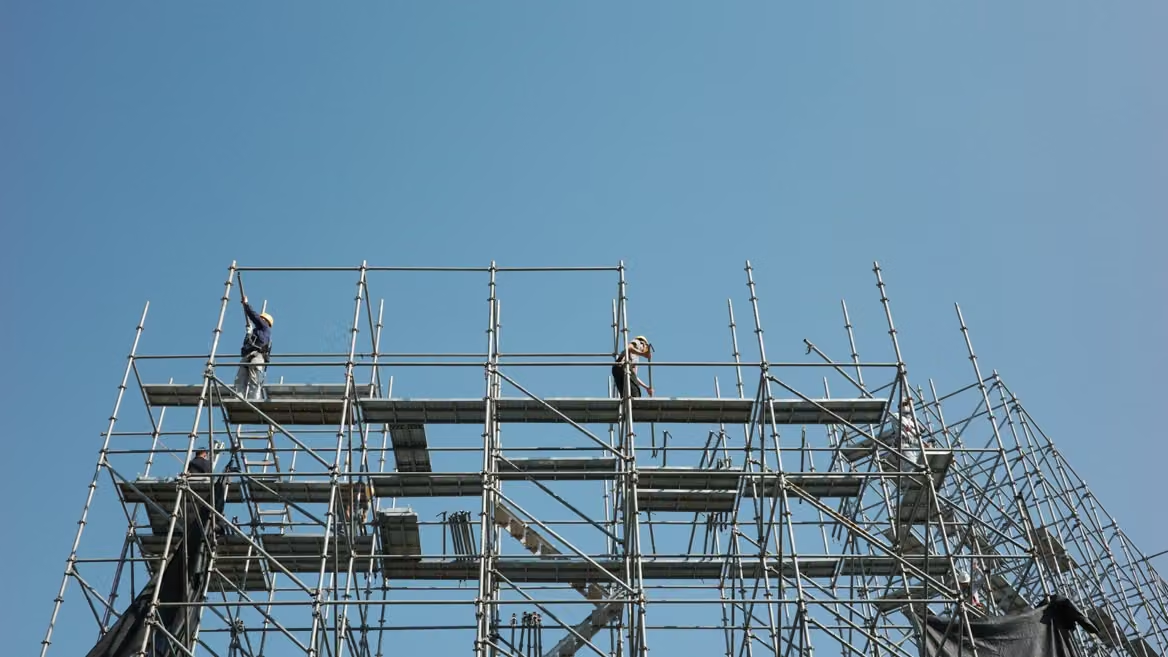
You or someone you love was hurt on a construction site, and you are trying to understand what workers' compensation covers and whether anyone else may be responsible. Tell us your story.
CBW Law reviews construction injuries to workers, visitors and people near a job site. We look at who controlled the work and equipment, what the safety records show, and whether a claim beyond workers' compensation may exist. Tell Us Your Story. Contacting us does not create an attorney-client relationship.
Construction work puts people near heights, heavy equipment, live power and open trenches every day. When someone gets hurt, workers' compensation is usually the first question, but it may not be the only one. A construction accident attorney looks at who controlled the site, who supplied the equipment and what the safety records show, because a claim against someone other than the employer may be possible. Neither an injury nor a safety citation, on its own, settles who is legally responsible.
How construction site accidents happen
Construction work carries serious risks. The Bureau of Labor Statistics counted 5,070 fatal work injuries in the United States in 2024. Construction and extraction workers accounted for 1,032 of them, and 370 of those deaths came from falls, slips and trips1. Most construction injuries are not fatal, but the same hazards cause them.
OSHA's construction outreach training includes lesson plans on four hazards it calls the Focus Four: falls, caught-in or -between hazards, struck-by hazards and electrocution3. Injuries we hear about tend to fit one of these patterns:
- Falls from roofs, ladders, scaffolds, lifts, open floor edges and holes
- Falling objects, such as tools, materials or loads that slip from a crane or hoist
- Electrocution and electrical burns from overhead power lines, live wiring or damaged tools
- Caught-in or caught-between incidents involving machinery, rotating parts or shifting materials
- Trench and excavation collapses, and falls into open excavations
- Equipment and vehicle incidents, including backovers, rollovers and forklift or loader strikes
- Tool failures, such as a nail gun, saw or scaffold part that did not work as designed
Falls lead the list. OSHA calls them the leading cause of death in construction and, citing BLS data, reports 389 fatal falls to a lower level out of 1,034 construction fatalities in 20242. OSHA's total groups deaths differently from the BLS occupation count above, so the two numbers differ slightly. OSHA says workers six or more feet above a lower level are at risk of serious injury or death if they fall, and that employers must provide fall protection and the right equipment for the job2.
Trenches are another known danger. OSHA says cave-ins pose the greatest risk to workers' lives in trenching and excavation. Its prevention guidance is to slope or bench the walls, shore them, or shield workers with trench boxes, to provide a safe way in and out, to keep materials away from the edge, and never to enter a trench that has not been properly inspected4.
Visitors, delivery drivers and people passing by
Construction hazards don't always stay inside the fence. Dropped materials, swinging loads, equipment backing out of a gate, and closed or uneven sidewalks can hurt delivery drivers, inspectors, future tenants touring a site, neighbors and pedestrians. Arizona's workers' compensation exclusive-remedy rule is written for employees10, so a person who does not work for the company that hurt them is usually not limited to workers' compensation. Their claim generally follows ordinary negligence and premises liability rules.
Common construction injuries and their effects
Construction injuries range from sprains and cuts to injuries that change a life. Some are hard to see at first.
- Head and brain injuries. A study of federal fatality data found 2,210 fatal traumatic brain injuries in construction from 2003 to 2010. Falls caused 57% of them, and structural iron and steel workers and roofers had the highest rates5.
- Spinal cord injuries. Falls and heavy impacts can injure the spine, sometimes causing paralysis.
- Electrical injuries. MedlinePlus notes that some electrical burns look minor while there may be serious internal damage, especially to the heart, muscles or brain. Current can also cause cardiac arrest and falls after contact6.
- Crush and amputation injuries from machinery, collapsing materials and caught-between incidents.
- Fractures, burns and eye injuries from falls, fires, arcs and flying debris.
Medical guidance is simple on one point: MedlinePlus advises calling 911 or the local emergency number if a person has been injured by electricity6. For any serious injury, getting checked promptly also creates a record that ties the injury to the day it happened.
Workers' compensation and construction accident lawsuits
For most injured workers, workers' compensation is the starting point. In Arizona, a worker who is entitled to compensation generally cannot also sue the employer, a co-worker acting in the scope of employment, or the employer's workers' compensation carrier10. That trade-off is the core of the system: benefits without proving fault, in exchange for limits on suing the employer.
There are narrow exceptions. Arizona law allows a lawsuit against the employer when the injury was caused by willful misconduct, which the statute defines as an act done knowingly and purposely with the direct object of injuring another. The act must be the personal act of the employer, a partner or an elective corporate officer, and it must show willful disregard of employees' safety10. Carelessness, even serious carelessness, does not meet that definition. Other states have their own rules about employer immunity and its exceptions.
Third-party claims
Workers' compensation limits claims against your own employer. It does not necessarily protect everyone else on the site. Arizona law lets an injured worker pursue a claim against another person “not in the same employ” whose negligence or wrong caused the injury11. On a busy job, that might be a different subcontractor, an equipment maker or a property owner, depending on the facts.
Arizona also attaches conditions to those claims. The worker must give the workers' compensation carrier written notice of the plan to sue. The carrier has a lien on the recovery for benefits it paid, after reasonable expenses including attorney fees. If the worker does not file within one year after the claim accrues, the claim is treated as assigned to the carrier, although it can be reassigned back11.
Who counts as the employer can be its own question. Under Arizona law, when a business hires a contractor for work that is part of its regular trade and keeps supervision or control over that work, the contractor's and subcontractors' employees may be treated as employees of that business for workers' compensation purposes12. That can affect whether a general contractor or owner can be sued at all.
OSHA rules, citations and what they do not decide
Federal OSHA standards for construction appear in 29 CFR Part 1926, and in many states a state agency enforces its own plan. In Arizona, the Arizona Division of Occupational Safety and Health, part of the Industrial Commission of Arizona, runs the state plan for most private and state and local government workplaces. Some workplaces, such as those on Indian reservations and certain federal sites, stay under federal OSHA9.
What OSHA findings can and cannot show
- Fall protection
- OSHA says employers must provide fall protection for workers six feet or more above a lower level2.
- More than one employer
- OSHA's multi-employer policy can cite a creating, exposing, correcting or controlling employer. A controlling employer has general supervisory authority over the site, by contract or in practice, and must use reasonable care to prevent and detect violations8.
- Citations are case-specific
- OSHA says decisions on whether to cite should rest on all the relevant facts found in the inspection8.
- Civil rights unchanged
- The OSH Act does not enlarge or diminish employers' and employees' common law or statutory rights, duties or liabilities for workplace injuries7.
In practice, an inspection file can still be useful. It may contain photos, interviews, measurements and a timeline. But OSHA asks whether a standard was violated, and a civil claim asks whether a party was negligent under state law and caused the harm. A citation can be contested, reduced or withdrawn, and an accident can happen with no citation at all. A construction injury attorney treats OSHA findings as evidence to weigh, not as the answer.
Who may be responsible on a construction site
Responsibility depends on who controlled the work, the site and the equipment, and on the contracts between them. Depending on the facts and the state, a claim might involve:
- A general contractor or construction manager
- A subcontractor other than your employer
- The property owner or developer
- The maker of a defective tool, ladder, scaffold, lift or machine
- An equipment rental or maintenance company
- A design professional, where a plan created the hazard
- A delivery or trucking company whose driver caused the harm
- A utility or electrical contractor responsible for nearby lines
None of these parties is responsible just because of its role. A general contractor may be treated as a statutory employer in some Arizona cases12, and a manufacturer is answerable only if the product was defective and the defect caused the injury. The facts decide.
Records that show what happened on the site
Job sites change fast. Scaffolds come down, trenches get filled and damaged equipment gets repaired or sent back. Saving what you can early helps.
Gather what you can
From the day of the injury
- Incident or accident report
- Photos and video of the area, equipment and conditions
- Names and phone numbers of co-workers and witnesses
- The names of every company working on site that day
- Emergency and medical records
Safety and site records
- Site safety plan, job hazard analysis and toolbox talk sign-ins
- Fall protection, trench and inspection logs
- Training records and certifications
- OSHA or ADOSH inspection files and any citations
- Daily reports and superintendent logs
Contracts and equipment
- Prime contract and subcontracts, including safety duties
- Equipment rental agreements and maintenance records
- Manuals, warnings and recall notices for tools and machines
- Workers' compensation claim forms and payment records
If a tool or piece of equipment failed, ask that it be kept as it is. A product claim can depend on examining the actual item.
When to talk to a construction accident lawyer
A workers' compensation claim may be all that applies, and that is a perfectly common outcome. It can still make sense to talk with a construction accident lawyer if:
- Someone other than your employer controlled the area, the equipment or the work that caused your injury
- A tool, ladder, scaffold or machine broke or did not work as expected
- You were a visitor, driver or passer-by rather than a worker on the site
- The injury is serious, such as a brain or spinal injury, an amputation or severe burns
- A family member died on a construction site
- A workers' compensation claim was denied or you are unsure who your employer was
A claim review considers who employed you, who else was on the site and what each party controlled, the contracts, the equipment, the safety records, and which state's law applies. Every construction site injury claim turns on its own facts.
Filing deadlines after a construction injury
Construction injuries can involve more than one deadline at the same time. In Arizona:
- A workers' compensation claim generally must be filed with the Industrial Commission within one year after the injury occurred or became known13.
- Most personal injury lawsuits, including third-party claims, must be filed within two years after the claim accrues. A wrongful death claim accrues at the death14.
- If an injured worker does not file a third-party lawsuit within one year, the claim is treated as assigned to the workers' compensation carrier11.
Claims against a government body, such as a city that owns a project, may involve special notice rules and shorter deadlines. Other states set their own deadlines. If someone died, our wrongful death page covers what families should know. Because sites change quickly, early contact also helps preserve evidence.
What happens after you contact CBW Law
How a review works
-
You tell us what happened
Share where the site was, what you were doing, and who you worked for. Rough details are fine at the start.
-
We map the job site
We look at which companies were on site, who controlled the work and equipment, and how your workers' compensation claim stands.
-
We gather records
With your permission, we request incident reports, inspection files, contracts and medical records.
-
We explain your options
We tell you what we found, whether a third-party claim may exist, and whether we can help.
Workers' compensation is not always the whole story, and injured people deserve to know whether anyone else shares responsibility.
Plain English
Medical, Health & Insurance
Hospital records, workers' compensation letters and safety reports each use their own vocabulary. These are the terms that come up most after a construction injury.
Medical terms
- Traumatic brain injury (TBI)
- Damage to the brain from a blow or jolt to the head. Falls cause most fatal TBIs in construction5.
- Electrical injury
- Damage to the skin or internal organs from contact with electrical current, which can be worse inside than it looks6.
- Spinal cord injury
- Damage to the bundle of nerves in the spine that can cause loss of feeling or movement below the injury.
- Crush injury
- Damage caused when part of the body is squeezed between heavy objects, which can affect muscles, nerves and blood flow.
Workers' compensation terms
- Exclusive remedy
- The rule that workers' compensation is generally the only remedy against your employer in Arizona10.
- Third party
- Anyone other than your employer and co-workers whose negligence may have caused your injury11.
- Statutory employer
- A business treated as your employer for workers' compensation because it kept control over work that is part of its regular trade12.
- Lien
- The carrier's right to be repaid from a third-party recovery for benefits it paid11.
Safety and legal terms
- Focus Four
- OSHA's name for four leading construction hazards: falls, caught-in or -between, struck-by and electrocution3.
- Controlling employer
- Under OSHA's citation policy, an employer with general supervisory authority over a site8.
- Citation
- A finding by OSHA or a state plan that a safety standard was violated. It is not a civil judgment.
- Comparative fault
- Dividing responsibility by percentage. In Arizona, an injured person's share reduces damages but does not bar the claim15.
Questions
Frequently asked construction injury questions
Short answers to questions injured workers and families often ask.
Can I sue my employer after a construction accident?
Usually not in Arizona. Workers' compensation is generally the only remedy against your employer, co-workers and the employer's insurer10. The main exception is willful misconduct, meaning an act done knowingly and purposely to injure someone10. Other states have their own exceptions, so the answer depends on where you were hurt.
What is a third-party construction claim?
It is a claim against someone other than your employer whose negligence or wrong caused your injury, such as another contractor, an equipment maker or a property owner11. It runs alongside workers' compensation, not instead of it, and it has to be proved like any other injury claim.
Does an OSHA citation prove the company was negligent?
No. A citation is an enforcement finding under safety rules. Federal law says the OSH Act does not enlarge or diminish employers' or employees' legal rights, duties or liabilities for workplace injuries7. A citation and the inspection file can be useful evidence, but a civil claim still has its own requirements.
What if OSHA never investigated or issued no citation?
That does not end the question either. Many injuries are never inspected, and OSHA's decision to cite depends on the facts found in its inspection8. A civil claim is judged on all the evidence, including witnesses, photos, contracts and equipment records.
Do I have to pay back workers' compensation if I win a third-party claim?
I was not a worker. I was walking past a site and got hurt. What applies?
Arizona's exclusive-remedy rule applies to employees10, so a passer-by or visitor is usually not limited to workers' compensation. A claim would generally follow ordinary negligence rules, and it would depend on who controlled the area and whether reasonable precautions were taken.
Can I bring a claim if I was partly at fault?
In Arizona, your own share of fault reduces the damages in a third-party claim but does not bar it15. Workers' compensation generally does not depend on fault. Other states follow different comparative fault rules, and some bar recovery past a certain percentage.
What if a tool or machine failed?
The maker, seller or rental company may be responsible if the product was defective and the defect caused the injury. Keeping the item as it is matters, so ask that it not be repaired, discarded or returned until it can be examined.
Who enforces safety rules on Arizona construction sites?
Most private construction sites in Arizona fall under ADOSH, part of the Industrial Commission of Arizona, which runs the state's OSHA-approved plan. Some sites, such as those on Indian reservations or certain federal property, stay under federal OSHA9.
How long do I have after a construction injury?
Tell Us Your Story
Construction site injuries often start with workers' compensation, but a site with many companies, machines and contracts can raise other questions. The answers depend on who controlled the work, what the records show and the law where it happened.
If you or a family member was hurt on or near a construction site, CBW Law can review what happened with you. We will be honest about what we find and whether we can help.
Tell Us Your Story Call (800) 476-2416
This page is general information about construction site injuries. It is not legal or medical advice and does not create an attorney-client relationship. An accident, an injury or a loss does not, by itself, establish that anyone was negligent or legally responsible, and the law differs from state to state. No outcome can be promised in any case.