Case type Product Liability
Defective Industrial Machinery
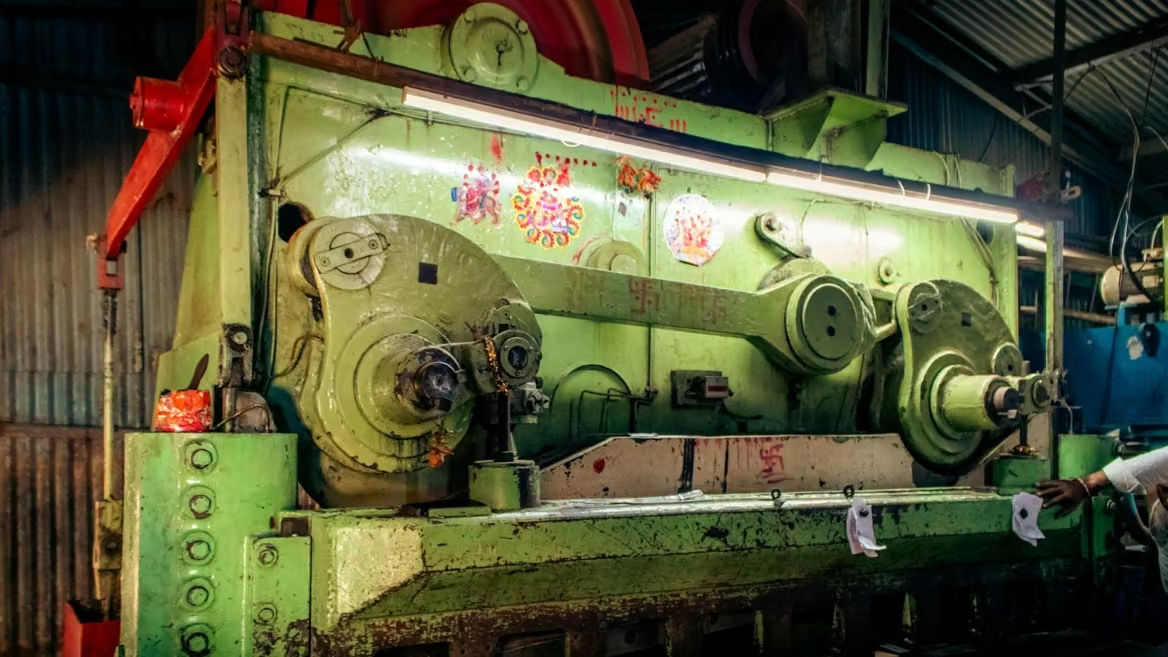
Hurt at work by a press, conveyor, robot or other machine? Tell us your story.
Workers' compensation may not be the only path after a machine injury. CBW Law reviews whether the machine itself was defective and who made, modified or maintained it. Tell Us Your Story. Contacting us does not create an attorney-client relationship.
Industrial machines can crush, cut and amputate in an instant. Some injuries come from missing guards, poor maintenance or unsafe work practices; others from machines designed without adequate guards, interlocks or warnings. Workers' compensation usually covers the employer, but a claim against a machine's manufacturer may also be possible. A machinery injury lawyer looks at both the machine and the workplace.
What industrial machinery cases involve
Industrial machinery claims usually involve fixed or heavy equipment used in plants, warehouses, farms and job sites:
- Presses, shears and stamping equipment
- Conveyors and packaging lines
- Mixers, grinders and saws used in production
- Robots and automated equipment
- Forklifts and other powered industrial trucks
- Agricultural and food-processing machinery
Portable tools and consumer equipment are covered on our defective tools and power equipment page.
Machine guarding and hazardous energy
OSHA explains that moving machine parts can cause crushed fingers or hands, amputations, burns or blindness, and that any machine part that may cause injury must be safeguarded1. Federal rules require guarding to protect operators and others from hazards at the point of operation, ingoing nip points, rotating parts and flying chips and sparks2. Separate rules cover lockout/tagout, the control of hazardous energy during servicing and maintenance, where a machine could start up unexpectedly3.
Workplace machine safety at a glance
- Guarding
- Required for point-of-operation and other moving-part hazards2.
- Lockout/tagout
- Controls hazardous energy during servicing3.
- Amputations
- OSHA runs a National Emphasis Program on amputation hazards in manufacturing1.
- Work deaths
- About 15 U.S. workers die on the job each day from traumatic injury4.
Product defect or workplace condition?
These are two different questions, and they often lead to different claims:
| Question | Typical focus |
|---|---|
| Was the machine defective? | Design of guards and interlocks, built-in safety features, warnings, whether the danger was foreseeable to the maker |
| Was the workplace unsafe? | Missing or removed guards, maintenance, training, lockout procedures, OSHA compliance by the employer |
An OSHA citation against an employer is not proof that a manufacturer built a defective machine, and a machine that met its design when sold can be made unsafe by later changes. NIOSH's fatality investigators look for hazards but do not decide fault or blame4.
Workers' compensation and product claims
In many states, workers' compensation is the main remedy against an employer. In Arizona, for example, workers' compensation is generally the exclusive remedy against the employer, with limited exceptions5. But an injured worker may still pursue a claim against someone outside the employer, such as the machine's manufacturer6. These rules vary by state.
Injuries in machinery cases
- Amputations of fingers, hands or limbs
- Crush injuries
- Degloving and severe lacerations
- Burns
- Eye injuries
- Fatal injuries
Who may have a claim
- The machine's maker, model and serial number
- Who installed, modified or maintained it
- Whether guards and interlocks were present and working
- What task was being done when the injury happened
- OSHA or state inspection records
- The injuries and the workers' compensation file
Who may be responsible
- The machine manufacturer
- The maker of a component or safety device
- A company that rebuilt or modified the machine
- An installer or maintenance contractor
- The employer, within workers' compensation rules
Product liability claims can reach businesses throughout the chain of manufacture and sale7.
Filing deadlines for machinery injury claims
State deadlines apply to product claims. Examples:
- Arizona: generally two years for personal injury and wrongful death8.
- California: two years for personal injury9.
- New York: three years for personal injury10.
- Texas: two years for personal injury11, with most product claims limited to 15 years after the product's sale12.
For work injuries in Arizona, a worker receiving workers' compensation who does not sue an outside party within one year may lose control of that claim to the insurer6.
These examples are not complete, and other rules can apply. A product liability attorney can check the rules for your state early.
Records that help
What to gather
The machine
- Maker, model and serial number
- Photos already taken of the machine and guards
- Manuals and warning labels, if available
The workplace
- Incident and OSHA reports
- Names of coworkers who saw what happened
- Training records
Your records
- Medical records
- Workers' compensation claim documents
- Pay records
What happens after you contact CBW Law
How a machinery injury review works
-
You tell us what happened
Share the machine, the task and how you were hurt.
-
We identify the machine
We look at the maker, any recalls and its history.
-
We review the records
With your permission, we gather incident, OSHA and medical records.
-
We explain what we see
We tell you plainly whether a product claim may be possible alongside workers' compensation.
A workplace injury can involve both an unsafe workplace and an unsafe machine. Each is a separate question.
Plain English
Medical, Health & Insurance
Terms you may see after a machine injury.
Machine terms
Health terms
- Amputation
- Loss of all or part of a limb or digit.
- Degloving injury
- Skin and tissue torn away from underlying muscle or bone.
Claim terms
Questions
Frequently asked industrial machinery questions
Short answers to the questions people ask first.
Can I sue my employer for a machine injury?
Usually not directly; workers' compensation is generally the exclusive remedy against an employer, with limited exceptions5.
Can I file a machinery injury lawsuit against the manufacturer?
Possibly. A claim against an outside party, such as the maker, may be available alongside workers' compensation6.
Does an OSHA citation prove the machine was defective?
No. A citation addresses the employer's compliance. Whether the machine was defectively designed is a separate question.
What if the guard was removed?
Who removed it, when and why matter. A design that made removal necessary or easy can still be part of a claim.
The machine is old. Can I still bring a claim?
Possibly, but some states limit product claims by age. Texas, for example, generally limits product claims to 15 years after sale12.
Should I get the machine inspected?
Do not inspect it yourself. Ask your employer in writing to preserve it, and let experts examine it.
How long do I have to file?
It depends on the state. In Arizona, a third-party claim not filed within one year may pass to the comp insurer6.
What does a machinery injury attorney at CBW look at first?
The machine and its maker, the guards and safety devices, the incident reports and your medical records.
How much does it cost to talk to a machinery injury lawyer at CBW?
Telling us your story costs nothing, and contacting us does not create an attorney-client relationship.
Tell Us Your Story
Machines get repaired, modified or scrapped after an injury, so early action matters.
Tell us what happened. CBW Law will review your information and explain what we see. Submitting information does not establish an attorney-client relationship or guarantee representation.
Tell Us Your Story Call (800) 476-2416
This page is general information about industrial machinery injuries. It is not legal advice and does not create an attorney-client relationship. An injury, an OSHA citation or a workplace investigation does not, by itself, establish that a machine was defective or that a manufacturer is legally responsible. Workers' compensation and product liability laws differ by state, and no outcome can be promised.