Case type Utility Injuries & Property Damage
Downed Live Wire & Electrocution Injuries
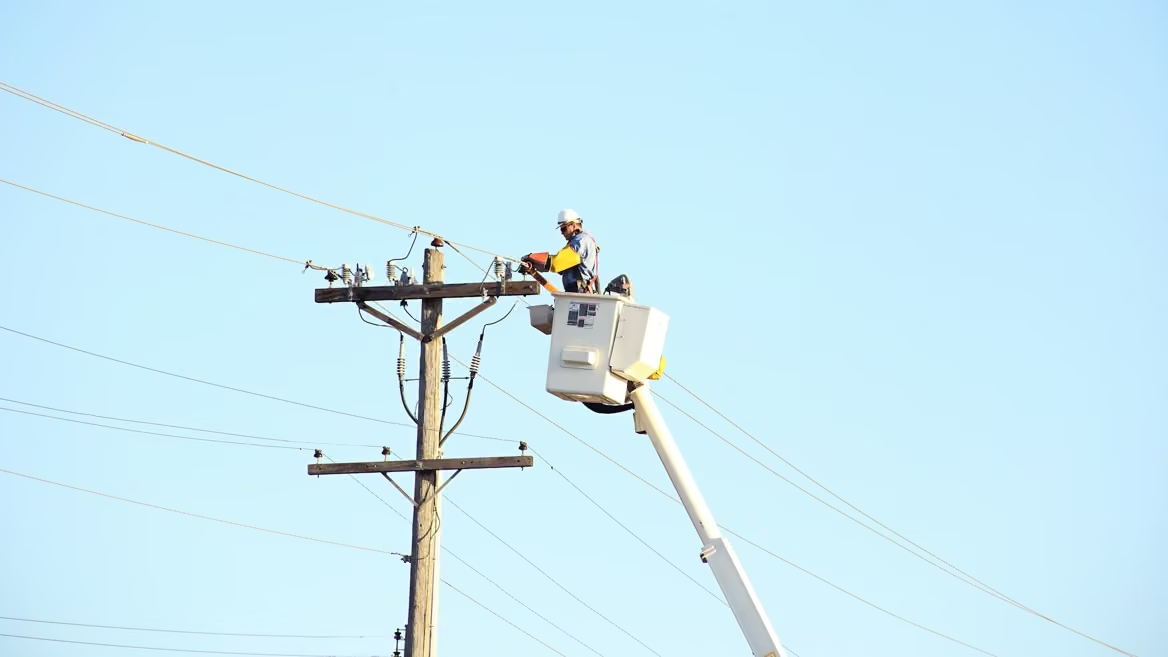
Hurt by a fallen power line, an energized fence or damaged electrical equipment, or lost someone to electrocution? Tell us your story.
This page is for people injured by contact with a downed or low-hanging line, energized equipment or electrified ground, and for families after a fatal electrocution. CBW Law reviews what happened, who controlled the equipment and which deadlines apply. Tell Us Your Story. Contacting us does not create an attorney-client relationship.
A power line on the ground can look harmless and still carry enough current to kill. Electricity can also travel through a fence, a car, a puddle or the ground around a fallen wire. People who survive contact may have burns, broken bones from a fall, or damage inside the body that is not visible at first. An injury near a power line does not by itself mean a utility or anyone else was negligent. An electrocution injury lawyer looks at why the line came down or was within reach, who knew about it, and how long it stayed that way.
Why downed lines and damaged equipment are so dangerous
Contact with power lines is one of the most frequent causes of electrical injuries in the workplace, according to OSHA6. The danger is not limited to touching the wire itself. Objects touching or near a downed line can also be energized2, and underground or downed lines can electrically charge floodwater4.
- A downed line that is not sparking or moving can still be live2.
- Fences, vehicles, trees and metal objects in contact with a line can carry current2.
- Water near a downed line can become energized4.
- Damaged transformers, meters and service drops can expose live parts.
- Lines hidden by fallen branches or debris are easy to miss5.
What to do if you see a downed power line
Safety comes first. Evidence can wait. Government safety agencies give consistent advice:
If you see a fallen or low-hanging line
-
Keep away and assume it is live
Never touch a fallen power line or anything touching it12. Do not go near it3.
-
Call for help
Report it to the power company1, and call 911 or the police if anyone is hurt or in danger3.
-
Stay out of water near lines
Do not walk or drive through standing water if downed lines are in it14.
-
If a line falls on your car
CDC advises staying inside and driving away from the line if you can. If the engine stalls, leave the ignition on, warn others not to touch the car, and wait for emergency crews1.
-
Do not try a rescue
Do not touch a person who may still be in contact with the source. Call 911 and let trained responders act18.
Never return to the scene for evidence
Take photos only from a safe distance, and only if you are already safe. Do not approach a line, move debris or enter a cordoned area to document anything.
Electrical injuries, burns and delayed complications
Electrical injuries are a distinct kind of trauma9. Some electrical burns look minor while serious internal damage has occurred, especially to the heart, muscles or brain8. MedlinePlus describes six ways electric current can injure the body8:
- Cardiac arrest from the current's effect on the heart
- Destruction of muscle, nerve and other tissue along the current's path
- Thermal burns where the body touched the source
- Injuries from falling after contact
- Burns and fires from electrical arcs and sparks
- Eye injuries from arcs and sparks
Symptoms can include irregular heartbeat, changes in alertness, broken bones, numbness, seizures and trouble breathing8. CDC notes that electrical shock may cause burns inside the body, so anyone shocked should see a doctor even if they feel fine1. Severe burns are covered in more detail on our Severe Burn Injuries page, and fall injuries can include traumatic brain injury or spinal cord injury.
Why early medical records matter
- Hidden damage
- Skin burns can understate injury inside the body8.
- Heart effects
- Irregular heartbeat is a listed symptom of electrical injury8.
- Falls
- Many electrical injuries happen at height, so fractures and head injuries are common companions8.
- Proof
- Emergency records made on the day connect the injury to the event.
What causes lines to fall or come within reach
An investigation usually asks how the line ended up where it was and whether anyone should have prevented it. Common contributing factors include:
- Storms, high winds and hurricanes that bring down poles and lines35
- Trees and branches growing into lines or falling on them
- Deteriorating, rotted or damaged poles and hardware
- Repairs that were reported but not made
- Construction or crane work too close to overhead lines
- Lines strung too low over driveways, fields or work areas
For work near overhead lines, OSHA requires unqualified workers to keep at least 10 feet from lines of 50 kilovolts or less, and more for higher voltages7. Whether those distances were kept is often a central question after a job-site electrocution.
What if it happened during a storm?
Storms bring down lines that were well maintained, and they also expose lines that were not. A storm does not answer the legal question by itself. A review looks at the condition of the pole and line before the storm, nearby tree growth, whether the line had been reported, and how quickly the utility responded after it came down. The answers differ in every case.
A wire on the ground is a hazard. Whether it is someone's legal fault depends on what they knew, what they did and how long it took.
Who may be responsible for a downed power line injury
Depending on the facts, a claim review may look at:
- Electric utilities and cooperatives
- Tree-trimming and line contractors
- Construction and crane companies
- Property owners and managers
- Employers and general contractors
- Equipment and hardware makers
- Municipal power departments
Each party has a different role. A utility may control the line, a contractor may have worked near it, and a property owner may control the land around it. When the injured person was working, the analysis also includes the employer. See our page on construction site injuries for more on job-site claims.
Higher-risk places and seasons
Downed lines can happen anywhere, but some settings and seasons bring more of them:
- Hurricane and tropical storm regions, where officials warn about downed electrical wires and loose lines after a storm passes5
- Flood areas, where downed or underground lines can energize standing water411
- Places hit by high winds and severe thunderstorms3
- Wildfire-prone regions, where damaged lines can also start fires
- Job sites with cranes, lifts, ladders or dump trucks working under overhead lines7
- Farms and orchards, where tall equipment and irrigation pipe can reach lines
- Homes where ladders, pool poles or tree saws are used near service drops
After a flood, the National Weather Service advises having the power company or a qualified electrician fix damaged wires, rather than handling them yourself11. Inside a flooded home, CDC advises against entering standing water to reach the main breaker and against turning power back on until an electrician has inspected the system1.
What an investigation of a power line injury looks at
An electrocution injury lawsuit is built on facts, not on the severity of the injury alone. A careful review usually asks:
- Who owned and controlled the line, pole or equipment
- When the line was last inspected, trimmed or repaired
- Whether anyone had reported a sagging line, leaning pole or sparking equipment
- How long the hazard existed before the injury
- Whether clearance rules were followed for nearby work7
- Whether warnings, barricades or de-energizing were possible
- What the weather and conditions were at the time
Engineers and electrical experts may examine the hardware, outage logs and maintenance history. Those records are usually in the utility's hands, which is one reason an electrocution injury attorney may send a preservation request early.
Workers' compensation and third-party electrocution claims
Many electrocutions happen at work: tree trimmers, roofers, line workers, crane operators, painters and farm workers are all exposed to overhead lines. Workers injured on the job are generally directed to their state's workers' compensation system10. Workers' compensation usually limits lawsuits against the employer, but rules differ by state.
A third-party claim may be possible against a company other than your employer, such as a utility that left a line too low, a contractor that ignored clearance rules or a manufacturer of faulty equipment. A third-party electrocution injury lawsuit requires proof that the other party was legally responsible, and any workers' compensation benefits may affect what is recovered.
Evidence that helps an electrocution injury claim
Utilities often repair or remove damaged equipment within hours. Record what you can from a safe place, and keep every document.
Records and evidence to keep
The incident
- Police, fire and EMS incident reports
- Utility outage or trouble ticket numbers
- Names and phone numbers of witnesses
- Photos or video taken from a safe distance
- Earlier complaints or reports about the line
Medical
- Emergency room, burn unit and cardiology records
- Imaging and test results
- Therapy and follow-up notes
- Medical bills and pharmacy receipts
Work and money
- Employer incident reports and OSHA notices
- Workers' compensation claim papers
- Pay stubs and records of missed work
- Receipts for travel, care and home changes
Write down the date, time, weather, exact location and anything said by utility crews or responders. Do not post about the incident online, and let investigators do their work. An electrocution lawyer can request utility records and ask that damaged equipment be preserved.
Legal options after serious injury or a fatal electrocution
Depending on the facts and the state, an injured person may seek compensation for medical care, lost income, pain and suffering, scarring and long-term limitations. When an electrocution is fatal, family members may have a wrongful death claim, which follows its own rules on who may file and what can be recovered.
Many lines are owned by investor-owned utilities, but some belong to cities, public power districts or cooperatives. When a government body owns the line, special notice rules usually apply. No result can be promised, and every claim depends on its evidence.
Filing deadlines for an electrocution injury lawsuit
Deadlines are set by each state. California generally allows two years for injury or death12, New York three years for personal injury13 and Texas two years, with a death claim counted from the date of death14.
When the line belongs to a public utility or government body, a written notice is often required much sooner: six months in California15 and Texas17, and 90 days in New York16. Claims against a federal agency must be presented within two years18. Workers' compensation claims have their own separate deadlines.
What happens after you contact CBW Law
How an electrocution claim review works
-
You tell us what happened
Share where and when the contact happened, what the line or equipment was, and how you were hurt.
-
We identify who controlled the equipment
We look at ownership, maintenance and any work being done nearby.
-
We check the deadlines
We flag any notice-of-claim or workers' compensation timelines that may apply.
-
We explain what we see
We tell you plainly whether we think an electrocution injury claim may be possible and what comes next.
Downed lines can also start fires. If your home or land burned, see Utility-Caused Wildfires, or return to our Utility Injuries & Property Damage overview.
Plain English
Medical, Health & Insurance
Electrical injuries bring their own vocabulary. Here are terms you may see.
Electrical terms
Medical terms
Claim and insurance terms
- Workers' compensation
- State insurance benefits for workers hurt on the job10.
- Third-party claim
- A claim against someone other than your employer whose conduct contributed to a work injury.
- Wrongful death claim
- A claim brought by family members after a death caused by another's wrongful act or neglect12.
Questions
Frequently asked downed power line questions
Short answers to questions people ask after a power line injury.
Can a downed wire still be energized?
What if the incident happened during a storm?
A storm does not automatically rule out a claim. A review looks at the line's condition before the storm, tree growth, earlier reports and how quickly the hazard was handled after it fell.
What if I was injured at work?
You will usually have a workers' compensation claim10. You may also have a third-party claim against a utility, contractor or equipment maker that was not your employer. An electrocution injury lawyer can look at both.
I felt fine after a shock. Should I still see a doctor?
Who can be sued in a downed power line lawsuit?
Possible parties include the utility that owns the line, contractors working nearby, property owners and equipment makers. The facts decide which, if any, are responsible.
What if a city owns the power lines?
Can a family file an electrocution lawsuit after a death?
Often, yes. State law decides who may bring a wrongful death claim and the deadline, which in some states runs from the date of death14.
How do I preserve evidence without going near the line?
Get report and ticket numbers, write down what you saw, keep medical records and take photos only from a safe distance. A lawyer can request utility records later.
What does an electrocution injury attorney do?
An attorney gathers incident, utility and medical records, works with electrical and medical experts, identifies responsible parties and handles deadlines and insurers.
Tell Us Your Story
Electrocution injuries can change a life in seconds, and the questions about why a line was down or within reach often go unanswered without a closer look.
If you or someone you love was hurt or killed by a downed line or energized equipment, tell us what happened. CBW Law will review your information and explain what we see. Submitting information does not create an attorney-client relationship or guarantee representation.
Tell Us Your Story Call (800) 476-2416
This page is general information about downed power lines and electrocution injuries. It is not legal or medical advice and does not create an attorney-client relationship. An accident, a service failure or an injury does not, by itself, establish that anyone was negligent or legally responsible. Laws and deadlines differ by state, and no outcome can be promised. If you have been shocked, seek medical care.
