Case type Utility Injuries & Property Damage
Contaminated Public Water Supply
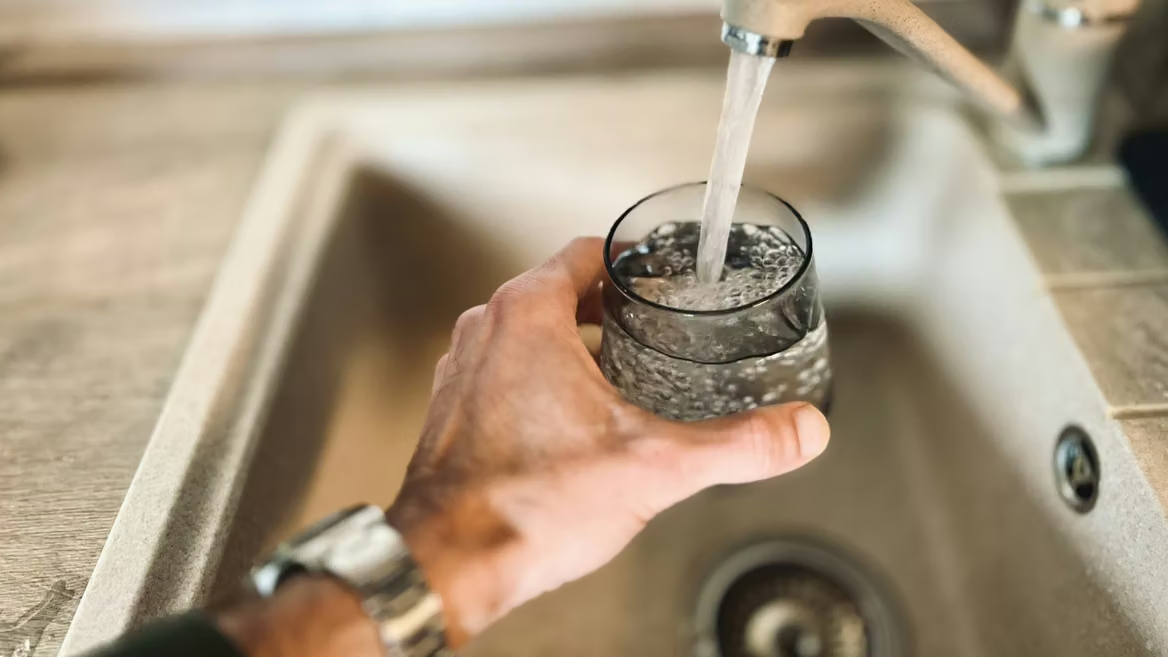
Got a notice that your tap water broke a safety rule, or worried that years of drinking it made someone sick? Tell us your story.
This page is for people served by a city, district or private water company who want to understand a contamination notice, an illness or damage to their home. CBW Law reviews what happened, what the water records show and which deadlines may apply. Tell Us Your Story. Contacting us does not create an attorney-client relationship.
Most people never think about where their tap water comes from until a notice arrives in the mail. Public water systems are tested and regulated, but contaminants can still get in through the source, the treatment plant or the pipes. Some contaminants cause illness within days. Others raise concerns only after years of exposure. A violation notice does not by itself prove that anyone was negligent or that the water caused a specific illness, and a water contamination lawyer looks at the records, the timing and the medical evidence before drawing any conclusion.
How contamination gets into a public water system
A public water system provides water through pipes to at least 15 service connections, or serves at least 25 people for at least 60 days a year. It can be owned by a city, a district or a private company. There are more than 148,000 of them in the United States1.
Water can pick up harmful substances at several points between the source and your faucet:
- The source: industrial discharges, spills, farm runoff or natural deposits can reach the river, lake or aquifer a system draws from11.
- Treatment: a treatment step that fails or is skipped can let germs or chemicals through11.
- Distribution: corrosion in older pipes can release lead into the water, and lead pipes are more likely in homes and cities built before 19869.
- Breaks and pressure loss: damage to the system can allow outside water into the pipes, which is why advisories often follow main breaks6.
Federal law has regulated public drinking water since the Safe Drinking Water Act of 1974, and states usually carry out the day-to-day oversight. Suppliers must test the water, report results and notify customers when a rule is broken4.
Contaminants found in public drinking water
Each contaminant behaves differently. Health effects depend on what the substance is, how much was in the water and for how long. The groups below are not interchangeable, and a water contamination attorney evaluates each one on its own science.
Contaminants, one at a time
- PFAS
- Man-made 'forever chemicals.' EPA set enforceable limits in 2024, including 4.0 parts per trillion for PFOA and PFOS7. EPA links certain PFAS to some cancers, immune effects and developmental effects, while research on exposure levels continues8.
- Lead
- Usually comes from lead service lines, solder or fixtures, not the source water. EPA says there is no safe level of exposure9, and CDC has identified no safe blood lead level for young children10.
- Arsenic
- Often comes from natural deposits or past orchard runoff. The federal limit is 0.010 milligrams per liter. Long-term exposure above the limit is linked to skin damage, circulatory problems and an increased risk of cancer11.
Where PFAS rules stand
Under the 2024 rule, systems begin reporting PFAS levels to the public in 2027 and must meet the limits by 2029. On May 18, 2026, EPA proposed keeping the PFOA and PFOS limits with an option to extend compliance to 2031, and proposed rescinding the limits for four other PFAS7. Those are proposals, not final rules, so the standards may change.
Public water systems and private wells are different
If you get a water bill, you are probably on a public system. If your home has its own well, the rules are not the same. Private well owners are responsible for their own water, and private wells are not regulated under the federal Safe Drinking Water Act or by most states2. EPA recommends testing a private well every year for bacteria, nitrates, dissolved solids and pH27.
That difference matters for a claim. A public system has testing duties and paperwork. A private well contaminated by a nearby polluter raises different questions, usually about the source of the pollution rather than a supplier's duties.
Water testing, Consumer Confidence Reports and violation notices
Three kinds of records tell you what a supplier knew and said:
- Consumer Confidence Reports. Community water systems must send customers an annual water quality report by July 1. You can ask your supplier for a copy or search EPA's CCR tool3.
- Violation notices. When a situation could immediately affect health, the supplier has 24 hours to notify people who drink the water. Less urgent violations require notice within 30 days, and others are reported annually4.
- Monitoring results. Sampling data held by the supplier and the state show what was measured, when, and whether testing was done on schedule.
Comparing those records over time can show whether a problem was found quickly, whether notices went out on time and whether testing was skipped. Missing or late paperwork is not proof of liability, but it is one of the first things a water contamination lawyer checks.
Boil water, do not drink and do not use advisories
Advisories tell you how to stay safe while a problem is fixed. The right precaution depends on what is in the water5.
| Advisory | What it tells you | Why |
|---|---|---|
| Boil water | Boil tap water before drinking or cooking with it. | Boiling kills germs5. |
| Do not drink | Use bottled water for drinking and cooking. | Chemicals or toxins may be present, and boiling will not remove them56. |
| Do not use | Do not use tap water for anything while the advisory lasts. | Any contact with skin, lungs or eyes could be harmful. These are rare5. |
How exposure happens: drinking, cooking and bathing
Drinking and cooking are the main routes for most chemical contaminants, including lead, which is why EPA advises using only cold water for drinking, cooking and baby formula9. Bathing raises different questions for different contaminants. CDC notes that water unsafe to drink can sometimes be used for bathing if you do not swallow it, but not when it may contain sewage or toxic chemicals18. Legionella is a separate case, because it infects people who breathe in contaminated mist12.
A claim review asks which route applies to the contaminant at issue, rather than assuming every use of the water carried the same risk.
Health concerns, exposure time and medical records
Some illnesses, such as a stomach infection after a treatment failure, appear within days. Others, such as cancers studied in connection with PFAS or arsenic, are linked to long-term exposure811. Children face particular risk from lead10.
- How long you lived or worked where the water was served
- Which household members drank the water, including infants and pregnant family members
- When symptoms began and when a diagnosis was made
- Whether blood lead or other test results exist
- Whether a doctor has connected the illness to water exposure
A diagnosis alone does not show that water caused it. Causation usually requires medical and scientific evidence that ties the specific contaminant, at the levels measured, to the specific illness.
A violation notice tells you a rule was broken. It does not tell you who is responsible or whether the water caused an illness. The records do.
Who may be responsible in a water contamination lawsuit
Depending on the facts, a claim review may look at:
- Public or private water suppliers
- Treatment plant operators and contractors
- Industrial facilities that discharged chemicals
- Manufacturers of PFAS or other chemicals
- Landlords and property managers
- Companies that installed or repaired pipes
- Government bodies that operate the system
Responsibility is never presumed. A supplier may have followed every rule while a polluter upstream caused the problem, or the reverse. Some large cases have ended in settlements. In 2021, a federal judge approved a $626.25 million partial settlement in the Flint water litigation15. In 2024, a court approved 3M's settlement with public water systems over PFAS, a deal that pays water systems rather than individual residents17. In 2025, a federal judge ruled the U.S. government liable for the 2021 Red Hill fuel leak into the Navy's water system in Hawaii26. Each outcome turned on its own facts.
Legal issues that come up
- Contamination that exceeded legal limits
- Failure to monitor or test on schedule
- Delayed or missing public notices
- Failure to fix a known problem, such as corrosion control or lead lines
- Pollution of the source water by a third party
Federal law also lets people sue to enforce the Safe Drinking Water Act, after giving advance notice25. Those enforcement suits are different from a personal injury claim for your own losses. A separate federal program for Camp Lejeune water claims had its own deadline, which passed on August 10, 202416. Lead rules are also changing: a 2024 EPA rule requires most systems to replace lead pipes within 10 years14.
Claims for injury, property and out-of-pocket costs
Depending on the facts and the state's law, a water contamination lawsuit may seek:
- Medical expenses and future care tied to a diagnosed illness
- Lost wages
- Pain and suffering
- Damage to plumbing, appliances or water heaters
- Costs of bottled water, filters, testing and temporary housing
- A wrongful death claim when a family member died
Some states limit what can be recovered against a public body, and no amount can be promised. The injury, the evidence and the law all shape what a claim may be worth.
Filing deadlines for a water contamination claim
There is no single national deadline. Each state sets its own. California generally allows two years for personal injury19. New York allows three years for injuries caused by the latent effects of exposure to a substance, usually counted from when the injury was discovered20. Other states count from different dates.
Claims against a government-run water system often need a formal notice first, on a much shorter clock: six months in California21 and Texas23, and 90 days in New York22. Claims against a federal agency must be presented in writing within two years24. Missing a notice deadline can end a claim before it starts.
Records to preserve after a water contamination notice
You do not need to collect samples or handle anything hazardous. Keep what you already have and write down what you remember. A water contamination lawyer can request the rest from the supplier and the state.
Records and evidence to keep
From the water supplier
- Water bills showing your address and dates of service
- Boil, do-not-drink or violation notices, letters and texts
- Consumer Confidence Reports for each year you lived there
- Any test results the supplier or a lab gave you
Health and costs
- Medical records and test results, including blood lead tests
- Pharmacy and medical bills
- Receipts for bottled water, filters, plumbing repairs and lodging
- Pay stubs showing missed work
Your timeline
- Dates you moved in and out
- Who lived in the home, with ages
- When symptoms began
- Photos of discolored water or damaged fixtures
Do not throw anything away
Keep notices and bills even if they look routine. If officials are testing your home, let them work, and follow their instructions on water use.
What happens after you contact CBW Law
How a water contamination claim review works
-
You tell us what happened
Share where you lived, which water system served you, what notices you received and what health problems or damage followed.
-
We review records and deadlines
We look at the notices, reports and timing, and identify any notice-of-claim rules that may apply.
-
We gather information with your permission
That can include medical records, testing data and public records about the system.
-
We explain what we see
We tell you plainly whether we think a claim may be possible and what the options are.
Water contamination is one part of our Utility Injuries & Property Damage work. If a broken main flooded your home, see Water Main Breaks & Flooding.
Plain English
Medical, Health & Insurance
Water reports, medical records and claim papers use technical terms. Here are some you may see.
Water quality terms
- Maximum Contaminant Level (MCL)
- The highest level of a contaminant legally allowed in public drinking water11.
- Parts per trillion (ppt)
- A very small concentration, used for PFAS limits7.
- Consumer Confidence Report
- The annual water quality report a community water system must send customers3.
- Lead service line
- A lead pipe connecting a water main to a building9.
Health terms
- Blood lead level
- A blood test that measures lead in the body. CDC has identified no safe level for young children10.
- Cryptosporidiosis
- A stomach illness caused by the Cryptosporidium parasite, mainly watery diarrhea13.
- Legionnaires' disease
- A serious lung infection caught by breathing in mist containing Legionella bacteria12.
Claim terms
- Notice of claim
- A formal written notice that many states require before suing a government body22.
- Discovery rule
- A rule in some states that starts the filing clock when an injury is discovered rather than when exposure began20.
- Causation
- Proof that the contaminant, at the levels involved, caused the illness or loss.
Questions
Frequently asked contaminated water questions
Short answers to questions people ask about contaminated public water.
How do I find my water quality report?
Your water supplier must send a Consumer Confidence Report each year by July 1. If you did not get one, call the supplier or use EPA's CCR search tool3. Keep copies for every year you lived at the address.
Does boiling remove contamination?
What if I rent my home?
Renters drink the same water, so the same exposure questions apply. A landlord may also have duties involving plumbing or notices, depending on state and local law. Keep your lease, rent receipts and any notices you received.
How can I document past exposure?
Build a timeline from leases, utility bills, school or work records and medical files. Collect old notices and Consumer Confidence Reports for those years. A water contamination lawyer can request public testing and violation records for the system.
Do I have a water contamination lawsuit if I got a violation notice?
Not necessarily. A notice shows a rule was broken. A claim also needs evidence of harm, such as a diagnosed illness or property damage, and a link between that harm and the contamination.
Who can be named in a water contamination lawsuit?
Possible parties include water suppliers, treatment contractors, industrial polluters and chemical makers. Which ones apply depends on where the contamination came from and who controlled it.
Is a claim against a city water system different?
What does a water contamination attorney need from me?
Your address history, water bills, any notices, medical records and receipts for costs. Rough dates are fine to start.
My well water is contaminated. Is that covered here?
Private wells are not regulated like public systems2. If a nearby company polluted your well, you may still have a claim against that company. Tell us what happened and we will look at it.
How long do I have to talk to a water contamination lawyer?
It depends on your state, the type of claim and whether a government body is involved. Some notice deadlines are only months long, so it is wise to ask early.
Tell Us Your Story
Contaminated water can affect your health, your home and your trust in something you use every day. Whether anyone is legally responsible depends on the records, the science and the law where you live.
If you believe contaminated public water harmed you or your family, tell us what happened. CBW Law will review your information and explain what we see. Submitting information does not create an attorney-client relationship or guarantee that we will represent you.
Tell Us Your Story Call (800) 476-2416
This page is general information about contaminated public water. It is not legal or medical advice and does not create an attorney-client relationship. A contamination event, a violation notice or an illness does not, by itself, establish that anyone was negligent or legally responsible. Laws and deadlines differ by state, and no outcome can be promised. Talk to your doctor about health concerns.
