Case type IVF & Fertility Treatment Injuries
IVF Medication & Monitoring Errors
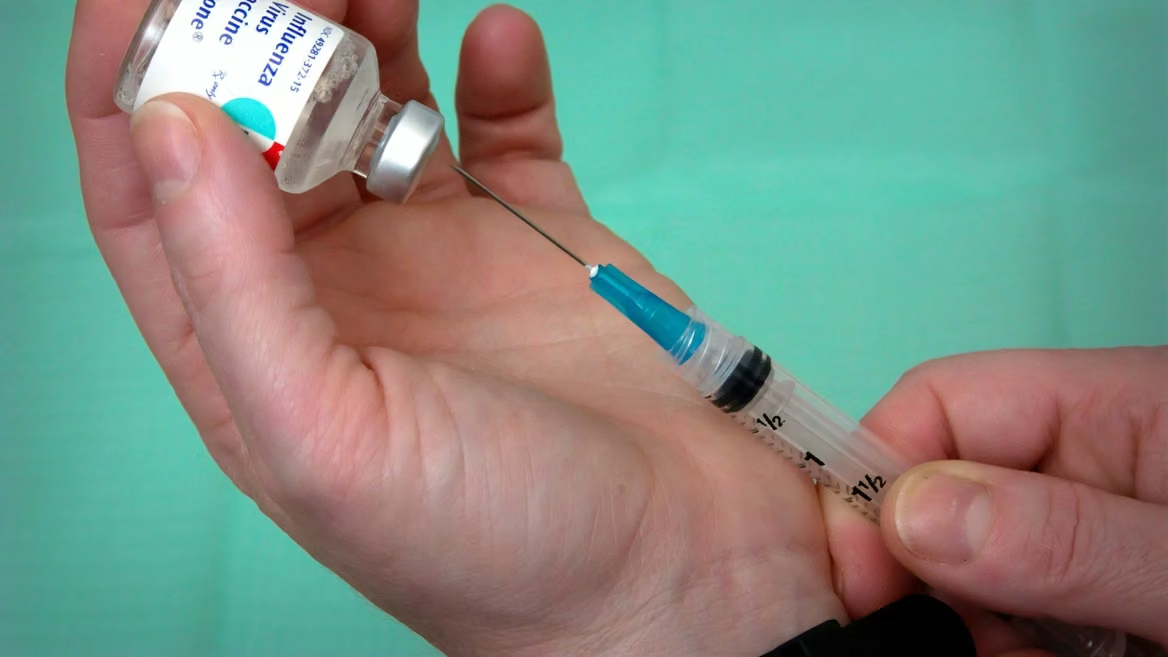
Your IVF cycle was derailed by a medication mix-up, a trigger shot timed wrong, or monitoring results no one seemed to act on. Tell us your story.
We hear from IVF patients who believe a prescribing, pharmacy, instruction or monitoring mistake cost them a cycle or harmed their health. CBW Law reviews the prescriptions, messages and monitoring records and explains what they show. Tell Us Your Story. Contacting us does not create an attorney-client relationship.
An IVF cycle runs on a tight schedule of injections, ultrasounds and blood tests, and each one feeds the next decision. A wrong prescription, a confusing instruction, a mistimed trigger shot or a worrying result that no one follows up on can cost a cycle and, in some cases, put a patient's health at risk. Side effects, a weaker or stronger response than hoped, and cycles that do not work are all common even with careful care. An IVF medication error lawyer looks for the specific point where the medicine, the instructions or the response to monitoring went wrong.
How medications and monitoring work in an IVF cycle
In the first stage of IVF, fertility medicines push the ovaries to grow several eggs instead of the usual one1. These are usually injectable hormones called gonadotropins2. Throughout this stage, patients have regular transvaginal ultrasounds to look at the ovaries and blood tests to check hormone levels1. The results guide changes to the medicines and the timing of the next steps.
A typical cycle may involve several kinds of medicine, each with its own role and schedule:
- Stimulation medicines that help the ovaries grow follicles containing eggs2
- Medicines for what doctors call pituitary suppression, such as a GnRH antagonist or a progestin3
- A trigger shot, often hCG or a GnRH agonist such as leuprolide, to complete egg maturation before retrieval36
- Progesterone after embryo transfer to prepare and support the lining of the uterus1
Many of these medicines are mixed and injected at home on a schedule that can change from one day to the next. That puts a lot of weight on clear prescriptions, accurate pharmacy fills and instructions patients can follow.
Where IVF medication errors happen
The U.S. Food and Drug Administration (FDA) uses a standard definition of a medication error, set by a national council known as NCC MERP: any preventable event that may cause or lead to inappropriate medication use or patient harm while the medication is in the control of a health care provider, patient or consumer8. The FDA notes that some bad reactions are not preventable, such as a sudden allergic reaction in a patient with no history of allergies. It also notes that a medication error may or may not cause harm8.
In fertility care, errors can occur at any point between the prescription and the injection:
- Prescribing. The wrong drug, strength or quantity is ordered, or a dose change is entered on the wrong patient's chart.
- Dispensing. A pharmacy sends the wrong product or strength, or labels it incorrectly.
- Instructions. The patient is given unclear, outdated or conflicting directions on mixing, dosing or timing.
- Administration. A dose given in the clinic is wrong, or the patient is not shown how to give an injection correctly.
- Timing. A start date, stop date or trigger time is miscommunicated.
- Communication. A change made after monitoring is never passed on to the patient, or a patient's message reporting a problem goes unanswered.
These are questions about process, and they sit alongside the other concerns covered in our IVF and fertility treatment injuries overview. They are different from the medical judgment involved in choosing a protocol, which a review looks at separately and with expert input.
Trigger shot timing and administration errors
The trigger shot is one of the most time-sensitive steps in IVF. It is given when ultrasound shows the leading follicles have grown enough, and the retrieval is timed from it; in the study described below, retrieval took place 36 hours after the hCG injection4. ESHRE's 2025 guideline notes that the trigger is most often given when several leading follicles measure between 16 and 22 millimeters3.
When the trigger goes wrong, the retrieval can find no eggs. Researchers call this empty follicle syndrome. A Fertility and Sterility study separated "false" cases, where no hCG could be detected in the patient's blood at retrieval, suggesting a human or pharmaceutical error, from "genuine" cases where hCG levels were appropriate4. The authors wrote that false cases have been documented from errors in pharmaceutical preparation, provider error and patient error4. They listed common mistakes:
- Failing to give the injection4
- Giving the injection at the wrong time4
- Mixing the medicine into solution incorrectly4
The same study found false empty follicle syndrome in 0.072% of the patients it examined4. That is rare. When it does happen, the questions are practical ones: what the patient was told, in what form, by whom, and whether the clinic's instructions matched the plan.
When monitoring results are missed or not acted on
Monitoring exists to catch problems early. MedlinePlus explains that patients on injectable fertility medicines need regular blood tests and pelvic ultrasounds to make sure the ovaries are not over-responding5. ASRM's patient guidance says serious OHSS complications can usually be avoided by recognizing the signs, symptoms and lab evidence that OHSS is getting worse and getting appropriate treatment6.
Ovarian hyperstimulation syndrome (OHSS) is the main safety concern. The ovaries swell and fluid leaks into the abdomen and chest5. MedlinePlus lists risk factors including an hCG shot, very high estrogen levels during treatment, an unusually large number of follicles, polycystic ovary syndrome, age under 35 and low body weight5. ESHRE's guideline includes recommendations on OHSS prevention, such as a reduced dose of stimulation medicine for women expected to respond strongly and, for women at risk, a GnRH agonist trigger combined with freezing all embryos instead of a fresh transfer3.
A monitoring failure might look like a rising number of follicles that is not reflected in any change to the plan, lab results that are drawn but not reviewed, or a fresh transfer that goes ahead despite documented OHSS risk without a recorded discussion. Whether any of these was an error depends on the full record and on expert review.
If you are in treatment now and have symptoms such as severe abdominal pain, shortness of breath, much less urine or nausea so bad you cannot keep food or liquids down, MedlinePlus advises contacting your provider5. Questions about your medicines belong with your own medical team.
Side effects, variable response and errors are not the same
Guidelines help draw that line but do not settle it. ESHRE says that following its guideline does not establish a standard of care and that clinical judgment still applies3. Its 2025 guideline says adding estradiol blood tests to ultrasound monitoring is probably not recommended3, so the absence of a particular test is not automatically a mistake.
Standards that apply to fertility medication safety
Key points from guidance and regulators
- Preventable events
- Under the definition the FDA uses, a medication error is a preventable event; a patient getting the wrong drug because of look-alike labels is an example8.
- Reporting
- Reporting medication errors to the FDA's Adverse Event Reporting System is voluntary in the United States, though the agency encourages providers, patients and manufacturers to report them8.
- Stimulation guidance
- ESHRE's 2025 ovarian stimulation guideline contains 121 recommendations, including 17 on monitoring, 18 on triggering and luteal support, and 8 on preventing OHSS3.
- OHSS prevention
- ASRM's 2024 guideline identifies who is at high risk for OHSS and reviews evidence-based prevention strategies7.
A cycle that does not work is not proof of error; a prescription that was wrong, or a warning no one answered, is worth a careful look.
How medication and monitoring errors can cause harm
The effects can be medical, emotional and financial:
- Severe OHSS requiring hospital care, fluid drainage and close monitoring5
- Rare but serious OHSS complications such as blood clots and kidney failure5
- A retrieval that finds no eggs after a missed or mistimed trigger4
- A cancelled fresh transfer, with embryos frozen until OHSS resolves5
- A lost cycle, repeat medicines and added treatment costs
- Stress, grief and lost time
When a medication problem leads to a complication at the retrieval itself, our page on egg retrieval injuries explains how those injuries are reviewed. Problems that occur later, at the transfer stage, are covered under embryo transfer errors.
When to talk to a lawyer about an IVF medication error
Consider a legal review if you received the wrong medicine or dose, your instructions conflicted with your prescription, a trigger error led to an empty retrieval, or you were hospitalized after warning signs went unanswered. A fertility medication error attorney will usually consider:
- What the prescription said and what the pharmacy actually dispensed
- What written or verbal instructions you received, and when they changed
- The monitoring schedule and what each ultrasound and blood test showed
- Whether results were reviewed and acted on, and by whom
- Your messages to the clinic and how quickly they were answered
- The medical, financial and emotional effects of what happened
- Which state's law applies and the deadlines that follow
Who may be responsible for an IVF medication error
Depending on where the mistake occurred, a review may look at:
- The prescribing physician
- Nurses or coordinators who gave dosing and timing instructions
- The fertility clinic, for its systems for reviewing results and answering patient messages
- A specialty or retail pharmacy that filled the prescription
- A drug maker, if a problem with the product itself affected how the medicine worked
Filing deadlines for an IVF medication error lawsuit
Deadlines depend on state law and the type of claim. California is one example. A professional negligence action against a health care provider must be filed within three years after the injury or one year after the patient discovers, or reasonably should have discovered, the injury, whichever comes first9. California also requires at least 90 days' notice to the provider before a professional negligence suit is filed. If that notice is served within 90 days of the deadline, the time to file is extended to 90 days after the notice was served10.
Other states set different periods and pre-suit rules, and a claim against a pharmacy or drug maker may follow different rules again. Because medication errors often surface quickly, during the same cycle, it is wise to check deadlines early.
Records that help in an IVF medication error claim
Keep everything you can, including packaging. These are the records a review usually needs:
Records to gather
Medicines
- Prescriptions and pharmacy receipts
- Pharmacy labels, boxes, vials and pens, if you still have them
- Medication calendars and dosing instruction sheets
- Trigger shot instructions with the date and time given
Monitoring
- Ultrasound reports showing follicle counts and sizes
- Blood test results drawn during the cycle
- Notes showing changes to the plan after each visit
Communication and outcome
- Patient portal messages, texts, emails and call logs
- Retrieval and transfer reports
- Emergency room or hospital records
- Bills and explanation-of-benefits statements
What happens after you contact CBW Law
How a review works
-
You tell us what happened
Describe the medicine, instruction or result that concerns you and roughly when it happened.
-
We line up the timeline
We match prescriptions, pharmacy fills, instructions and monitoring results day by day to see where they diverge.
-
We seek expert input where needed
Questions about clinical judgment, such as dose or protocol choices, need review by qualified medical experts.
-
We give you a straight answer
We explain what we found, what remains unclear and whether we can help with a claim.
Plain English
Medical, Health & Insurance
IVF medication and monitoring records are full of abbreviations. These are some of the most common.
Medicines
- Gonadotropins
- Injectable hormones that stimulate the ovaries to grow follicles containing eggs2.
- GnRH antagonist
- A medicine used for pituitary suppression during ovarian stimulation, one of several approaches in professional guidelines3.
- Trigger shot
- An injection, often hCG or a GnRH agonist, given to complete egg maturation before retrieval36.
- Progesterone
- A hormone given after embryo transfer to prepare and support the uterine lining1.
Monitoring
Complications
- Ovarian hyperstimulation syndrome (OHSS)
- Swollen ovaries and fluid leaking into the abdomen and chest after stimulation5.
- Empty follicle syndrome
- No eggs found at retrieval despite apparently mature follicles; "false" cases are linked to trigger problems4.
- Freeze-all
- Freezing all embryos instead of doing a fresh transfer, sometimes used to lower OHSS risk3.
Insurance and billing
- Specialty pharmacy
- A pharmacy that dispenses injectable and high-cost medicines, often including fertility drugs.
- Explanation of benefits (EOB)
- A health plan statement showing what was billed, paid and owed.
- Prior authorization
- A health plan's advance approval for a medicine or treatment.
Questions
Frequently asked IVF medication and monitoring error questions
Short answers to questions patients ask about fertility medicines and monitoring.
What counts as an IVF medication error?
Under the definition the FDA uses, a medication error is a preventable event that may lead to inappropriate medication use or harm8. In IVF that can include the wrong drug or strength, a pharmacy dispensing error, unclear or conflicting instructions, a missed or mistimed trigger shot, or a dose change that was never passed on to the patient.
Are side effects from fertility drugs a sign of a mistake?
My retrieval found no eggs. Could the trigger shot have been the problem?
It is one possibility. Researchers describe "false" empty follicle syndrome, where no trigger hormone is found in the blood at retrieval, and link it to errors such as a missed injection, wrong timing or incorrect mixing4. Other cases have no such explanation4. Your records and blood results can help show which applies.
Can a clinic be responsible for OHSS?
OHSS can happen even with good care, so it does not automatically mean negligence7. A review asks whether risk factors were recognized, whether monitoring results were reviewed and acted on, and whether symptoms were taken seriously. ASRM notes that severe complications can usually be avoided when worsening OHSS is recognized and treated6.
What if the pharmacy gave me the wrong medicine?
Keep the packaging, label and receipt, and tell your clinic right away so your care can be adjusted. A dispensing error may involve the pharmacy as well as, or instead of, the clinic. An IVF lawyer can compare the prescription with what was dispensed and how it affected your cycle.
Is a lower-than-expected response to medication an error?
Not by itself. Ovarian response varies between people and between cycles, and a smaller number of eggs than hoped is a common outcome. The question is whether the plan, the monitoring and the response to results met professional standards, which requires review of the full record.
Should I stop my medication if I think there is an error?
Do not change or stop any medicine on your own. Contact your fertility clinic or doctor right away and explain your concern. They can decide what is medically safe. A legal review can happen alongside your care and does not need to interrupt it.
How long do I have to file an IVF medication error lawsuit?
It depends on the state. In California, for example, a professional negligence claim against a health care provider must generally be filed within three years of the injury or one year after it was or should have been discovered, whichever is first9. Other states use different rules.
What records should I keep?
Keep prescriptions, pharmacy labels and packaging, instruction sheets, your medication calendar, portal messages and texts, and any ultrasound or blood test results you were given. Notes you made at the time about doses and timing can also help. A lawyer can request the clinic's full records.
Does contacting CBW Law mean you will take my case?
No. Contacting us starts a review of what happened, what the records show and which state's law applies. We will tell you honestly whether we think we can help, and if your concern is about a different stage of treatment, we can point you to the right place. Contacting us does not create an attorney-client relationship.
Tell Us Your Story
Fertility medicines and monitoring carry real risks even when everything is done right. But a wrong prescription, a confusing instruction or a warning sign that no one acted on is a different matter.
If something about your medicines or monitoring does not add up, tell us what happened. We will listen, go through the records with you and give you an honest view of where things stand.
Tell Us Your Story Call (800) 476-2416
This page is general information about IVF medication and monitoring errors. It is not legal or medical advice and does not create an attorney-client relationship. An unsuccessful cycle, a complication, an embryo loss or a testing limitation does not, by itself, establish that anyone was negligent. No outcome can be promised in any case.