Case type IVF & Fertility Treatment Injuries
Frozen Embryo Storage Failures
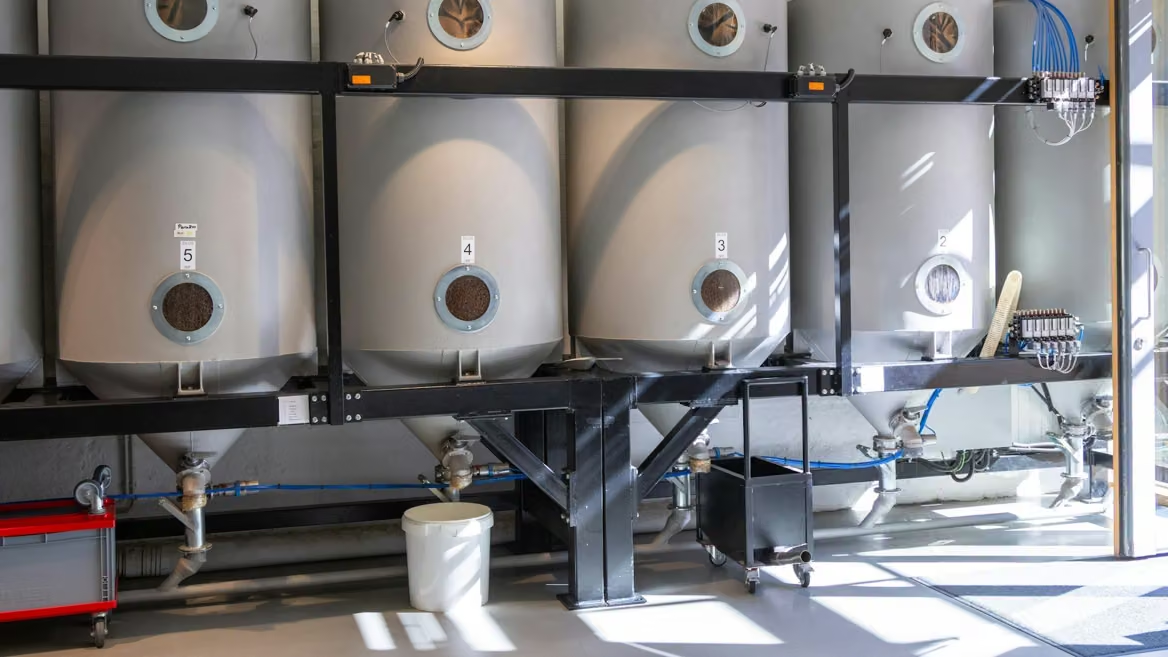
You received a letter saying a storage tank at your fertility clinic malfunctioned, or your embryos did not survive and you were later told why. Tell us your story.
CBW Law reviews cryogenic storage failures for people whose frozen embryos or eggs were lost or put at risk. We look at what the tank logs, alarm records and maintenance history show, and whether a lawsuit may be worth pursuing. Tell Us Your Story. Contacting us does not create an attorney-client relationship.
Frozen embryos depend on equipment that has to work every hour of every day, including nights and weekends when no one is in the lab. When liquid nitrogen runs low, an alarm is switched off, or a warning goes unanswered, a whole tank can warm at once. Two such failures in March 2018 affected hundreds of patients and led to years of litigation. A storage failure lawsuit asks whether the equipment, the monitoring and the people responsible did what they should have.
How frozen embryo storage works
Most embryos today are frozen by vitrification, a fast method that uses protective solutions to keep ice crystals from forming inside the cells. The embryos are then kept in tanks of liquid nitrogen until a patient is ready to use them3. The UK fertility regulator says there is no evidence to suggest that embryos are affected by how long they are frozen, though it notes that research is still under way3. What matters is that it stays cold.
That is the whole job of a storage tank. European laboratory guidance says the temperature of stored embryos should never rise above −140°C, during storage or transport1. A U.S. committee opinion on cryostorage stresses that embryos, eggs, sperm and reproductive tissue are often irreplaceable and must be kept under stringent conditions2.
A typical storage setup has several layers, and each one leaves a record:
- Insulated tanks, called dewars, holding liquid nitrogen
- Automatic or manual filling to replace nitrogen as it evaporates
- Sensors that track nitrogen level, temperature or tank weight
- Alarms that alert staff on site and after hours
- A backup tank to move embryos into if one fails
- Inventory records showing which embryos sit in which tank
What can go wrong in a cryogenic storage tank
A tank does not have to break suddenly for embryos to be lost. The problems that have come up in reported incidents and lawsuits include:
- Liquid nitrogen loss. If nitrogen levels drop, the temperature inside rises. That is how a California appeals court described the 2018 failure in San Francisco6.
- Insulation or seal problems. Guidance calls for checking tank integrity, vacuum performance and evaporation rates over time1. Lawsuits over the San Francisco failure alleged a possible faulty seal7.
- Filling system trouble. In Cleveland, the automatic filling mechanism on the failed tank had problems, so staff were adding nitrogen by hand5.
- Alarms turned off or not monitored. The same clinic said a remote alarm meant to alert an employee was off, so no alert went out as the tank warmed on a Saturday night5.
- Deferred maintenance. The Cleveland tank needed preventive maintenance, and the clinic was about a day from moving its contents when it failed5.
- Equipment defects. A federal jury found that the San Francisco tank had a manufacturing defect6.
Some of these are equipment problems. Others are human ones: an alarm someone switched off, a fill that was logged but not checked, a warning nobody answered. A careful review looks at both, because the answer shapes who may be responsible. Storage is one of several IVF and fertility treatment injuries we review.
A storage failure is not the same as a thaw failure
Many families first learn something is wrong at the moment of transfer, when an embryo does not survive warming. That alone does not mean the storage tank failed or that anyone was careless.
Laboratory guidance asks labs to record the thawing method, date, time, operator and each embryo's survival and quality after warming1. If your embryo did not survive, those records, together with the tank logs, can help show whether the cause was biology, the warming procedure or the storage conditions. Problems during warming itself are covered on our IVF laboratory errors page.
Safeguards for monitoring, alarms and maintenance
Professional guidance is specific about what a storage program should have in place:
What storage guidance calls for
- Continuous monitoring
- Tanks should be monitored at all times, with alarms that detect and log out-of-range temperature or nitrogen levels1.
- Backup capacity
- At least one backup tank should be available1.
- Maintenance
- Preventive maintenance schedules should be defined and documented, and tank integrity should be checked periodically1.
- Emergency planning
- Every IVF program should have a plan to protect fresh and frozen specimens in an emergency or natural disaster12.
- Nitrogen supply
- If automatic supply fails, tanks should be filled by hand, and a reserve nitrogen supply should be on hand1.
A 2026 review of IVF lab safety noted that frozen embryo inventories have grown sharply. It warned that rare equipment or data failures can now affect hundreds of patients, and it pointed to tools such as weight-based tank monitoring as protection9.
Embryo storage tank failure lawsuits: what courts found
Two failures in early March 2018 shaped how these cases are understood. Both are well documented, and the outcomes so far include a jury verdict, settlements and an appellate ruling.
The 2018 tank failures
-
March 3–4, 2018
A storage tank at University Hospitals' fertility clinic near Cleveland warms over a weekend5.
-
March 4, 2018
A tank at Pacific Fertility Center in San Francisco malfunctions. The clinic later notifies about 400 patients and attributes the problem to a loss of liquid nitrogen4.
-
March 2018
University Hospitals tells patients the remote alarm was off and that more than 4,000 eggs and embryos are unlikely to be viable5.
-
May 2019
An Ohio appeals court rules that a frozen embryo is not a person under Ohio law, so a couple could not bring a wrongful death claim for embryos lost in the Cleveland failure8.
-
Mid-2021
In the first federal trial, a jury finds the San Francisco tank had a manufacturing defect and assigns 90 percent of fault to the maker, Chart, and 10 percent to the clinic6.
-
November 2021
A California court approves as made in good faith a settlement resolving claims against the clinic, its lab operator and related defendants6.
The California appeals court described the San Francisco aftermath as hundreds of claims across federal court, state court and arbitration. Claims against the tank maker went forward in federal court, while claims against the clinic went to arbitration, and class certification was denied6. A 2019 review of these cases found that common claims included breach of contract, negligent handling of property and negligent infliction of emotional distress. Some Cleveland plaintiffs also sued the maker of the tank's alarm system, alleging it failed to notify staff7. Those were allegations, not findings.
These outcomes do not predict any other case. They do show that storage failures can involve product claims, contract claims and negligence claims at the same time.
How storage failures are discovered
Some families hear about a failure from the clinic. In San Francisco, the clinic began notifying patients about a week later4. In Cleveland, the first estimate of affected eggs and embryos later doubled5. Other families only learn of a problem when they schedule a transfer.
The hardest part is that viability often cannot be known until an embryo is warmed. A clinic may tell you your embryos were “potentially affected” and suggest waiting. Keep that notice and every later update. If you have embryos at a clinic that reports a failure, it is reasonable to ask in writing which tank held them and what the logs show for that tank. For losses outside a tank event, such as embryos that are simply missing, see lost or destroyed embryos.
What a storage failure can take from you
- Embryos or eggs frozen years ago, when you were younger
- Eggs frozen before cancer treatment that cannot be replaced
- The chance of genetic siblings for an existing child
- Money spent on retrieval, medication and years of storage fees
- New cycles with their own medical risks and costs
- Grief that others may not understand, and stress on your relationship
Eggs and embryos frozen before chemotherapy or at a younger age are often the hardest to replace. That is one reason guidance describes these tissues as irreplaceable2.
When to talk to a lawyer about an embryo storage failure
You may want to talk to an embryo storage lawyer if your clinic reported a tank event, if several patients lost embryos at the same time, or if the explanation you received points to alarms, maintenance or nitrogen supply. A review usually considers:
- What the temperature, nitrogen and alarm logs show
- Whether alarms were on, tested and answered
- The tank's age, maintenance history and any known defects
- Whether a backup tank and emergency plan existed
- What your storage agreement promised
- How and when you were told, and what you were told
Who may be responsible
Storage failures often involve more than one company. Depending on the facts, a claim may name:
- The fertility clinic or hospital
- A management company that runs the embryology lab
- An independent storage facility
- The tank manufacturer
- The maker of the alarm or monitoring system
- A service company responsible for filling or maintenance
In the San Francisco litigation, for example, the defendants included the clinic, the company that ran its embryology lab, that company's majority owner and the tank maker6. Fault is decided case by case.
Filing deadlines for a storage failure claim
Deadlines depend on your state and on the type of claim. A claim against a clinic may be treated as medical negligence. A claim against a tank maker may be a product liability claim with a different deadline.
California is an example. For injury claims against a health care provider based on professional negligence, the deadline is three years after the injury or one year after you discovered it or reasonably should have, whichever comes first. The three-year limit can be extended only in narrow situations, such as fraud or intentional concealment11. A notice from your clinic may start the clock, so do not wait for a thaw to find out whether you have a claim.
Records that can show what happened in the tank
Records to keep or request
Notices and agreements
- Every letter, email or call log about the failure
- Your storage agreement and consent forms
- Storage invoices showing what the clinic said it held
Tank and lab records
- Temperature and nitrogen level logs
- Alarm settings, alarm history and call-out records
- Fill logs and maintenance and service records
- The inventory showing which tank held your embryos
Your treatment
- Thaw records showing survival and quality
- Records of any new retrieval or transfer
- Bills and explanation-of-benefits statements
What happens after you contact CBW Law
How we review a storage failure
-
Tell us about the notice
Share what the clinic told you, when, and what you had in storage.
-
Line up the timeline
We compare the clinic's account with the dates of your treatment and storage.
-
Look for the tank records
With your permission, we request the logs, alarm data and maintenance history tied to your tank.
-
Give you a straight answer
We explain what we found, the deadlines that may apply, and whether we can help.
A storage tank has one job, and when it fails, the logs should tell families why.
Plain English
Medical, Health & Insurance
Storage failure notices and lab records use technical words. Here is what the common ones mean.
Freezing and storage
- Vitrification
- Fast freezing with protective solutions so that ice crystals do not form inside embryos3.
- Liquid nitrogen (LN2)
- The very cold liquid that keeps frozen embryos below the temperature guidance sets, which is never above −140°C1.
- Dewar or cryotank
- An insulated tank that holds liquid nitrogen and the embryos stored in it.
Monitoring and equipment
- Autofill
- A system that tops up liquid nitrogen automatically. If it fails, staff must fill tanks by hand1.
- Remote alarm
- An alarm that alerts staff by phone or message when a tank goes out of range, including after hours.
- Evaporation rate
- How fast a tank loses nitrogen. Guidance says it should be checked periodically, along with the tank's integrity1.
After warming
Insurance and billing
- Storage agreement
- The contract setting storage fees and the clinic's duties. It is often key evidence in a storage case.
- Explanation of benefits (EOB)
- A health plan statement showing what was billed and paid. It helps document the cost of lost and replacement treatment.
- Out-of-pocket costs
- What you paid yourself for retrieval, medication and storage that insurance did not cover.
Questions
Frequently asked embryo storage failure questions
Short answers to common questions about tank failures.
What causes a cryogenic tank to fail?
Reported causes include loss of liquid nitrogen, problems with filling systems, alarms that were turned off, overdue maintenance and product defects56. Guidance calls for continuous monitoring, alarms, a backup tank and documented maintenance to catch problems early1. The tank logs usually show which of these failed.
My embryo did not survive thawing. Does that mean the tank failed?
Not necessarily. Most frozen embryos survive the freeze-thaw process, but some do not3. A storage failure is a recorded event in the tank. The tank's logs and the thaw records together help show which explanation fits, so ask for both if you have questions.
Can I file a lawsuit over an embryo storage tank failure?
Possibly. Storage failure lawsuits have included contract, negligence and product claims7. Whether you have a claim depends on the records, your agreement and your state's law. A lawyer can look at the facts, explain the deadlines and tell you what may apply.
What happened in the Pacific Fertility Center case?
A tank failed in 2018 when its nitrogen levels dropped. In the first federal trial in 2021, a jury found a manufacturing defect and split fault 90 percent to the maker and 10 percent to the clinic. The clinic and related defendants later settled6.
What happened at University Hospitals in Cleveland?
Who can be sued when a storage tank fails?
How long do I have to file a claim?
It depends on the state and the type of claim. In California, claims against health care providers for professional negligence generally must be filed within three years of the injury or one year after discovery, whichever is first11. Product claims may follow different rules.
Should I move my remaining embryos?
That is a medical and practical decision to make with your doctors. From a legal view, keep every notice, ask in writing for the records tied to your tank, and talk to a lawyer before signing any release connected to the failure.
Is a class action the only option after a large tank failure?
No. In the San Francisco litigation, class certification was denied and nearly 150 individual lawsuits against the tank maker went forward, along with claims in state court and arbitration6. How claims proceed depends on the court and the agreements involved.
Tell Us Your Story
Storage tanks fail for reasons that can often be traced: nitrogen loss, alarms that were off, maintenance that was put off, or a defective product. An embryo that does not survive a careful thaw is a different thing.
If your clinic reported a storage failure, or you suspect one, CBW Law can review the records with you and tell you honestly whether we can help.
Tell Us Your Story Call (800) 476-2416
This page is general information about frozen embryo storage failures. It is not legal or medical advice and does not create an attorney-client relationship. An unsuccessful cycle, a complication, an embryo loss or a testing limitation does not, by itself, establish that anyone was negligent. No outcome can be promised in any case.