Practice area Defective Medical Devices
Defective Medical Devices
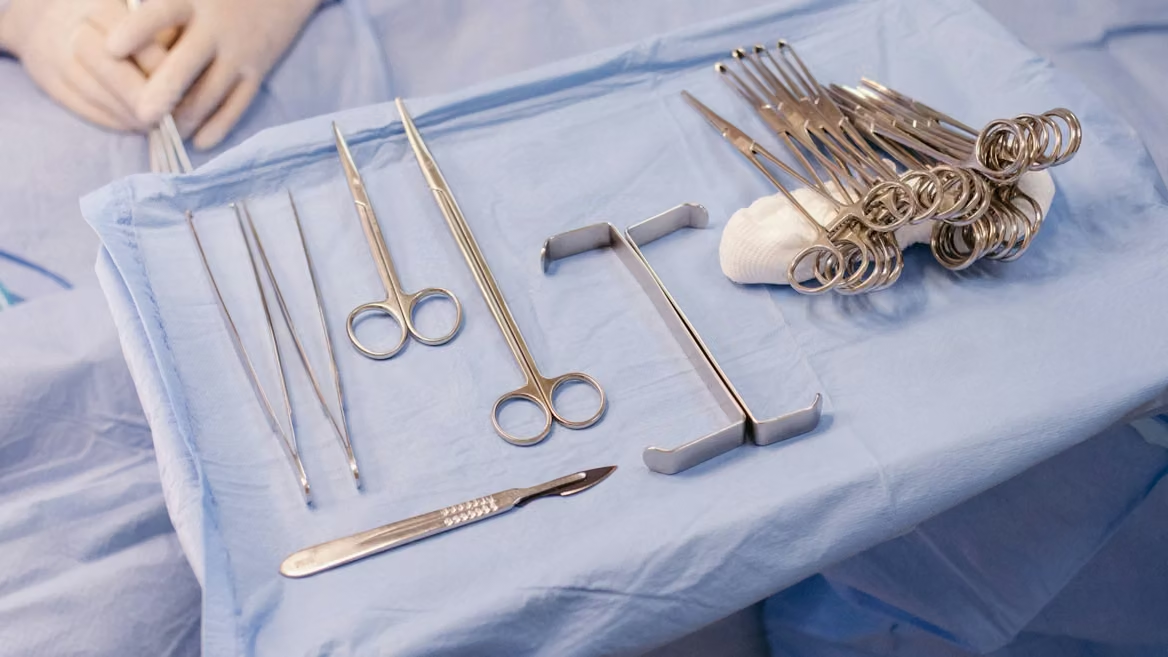
Hurt after an implant, a home medical device or a surgical tool failed? Tell us your story.
CBW Law reviews claims from people harmed by implants, home-use devices and surgical tools that failed or came without adequate warnings. Pick your device below, or tell us what happened. Tell Us Your Story. Contacting us does not create an attorney-client relationship.
Topics
Medical device topics
Pick the kind of device involved to read more.
-
Hip Implant Failure
Metal debris, early wear and revision surgery.
-
Knee Implant Failure
Polyethylene wear, loosening and recalled components.
-
Spinal Hardware & Fusion Cage Failure
Screws, rods, plates and interbody cages.
-
Hernia Mesh
Mesh complications after hernia repair.
-
Pelvic Mesh
Prolapse mesh and bladder slings.
-
Transvaginal Mesh
Mesh placed through the vagina for prolapse.
-
Breast Mesh & Internal Bra Complications
Mesh and scaffolds used in breast surgery.
-
Breast Implant Illness & BIA-ALCL
Systemic symptoms and implant-associated lymphoma.
-
Contraceptive Device Injuries
Essure, arm implants and other devices.
-
IUD Migration & Fracture
Perforation, embedment and breakage.
-
Pacemaker & Defibrillator Recalls
Batteries, software and defibrillation leads.
-
IVC Filter Fracture & Migration
Filters that break, move or can't be retrieved.
-
Spinal Cord Stimulator Failures
Lead fractures, high impedance and loss of therapy.
-
Insulin Pump & Glucose Monitor Failures
Pumps, pods and automated insulin delivery.
-
Glucose Monitor Recall
Recalled meters, sensors and receivers.
-
CPAP & BiPAP Defects
Foam breakdown and reprogrammed machines.
-
Surgical Robot Injuries
Robot-assisted surgery and its instruments.
-
Surgical Stapler & Clip Injuries
Misfires, staple-line failures and clips.
-
Olympus Scope Infections
Infections linked to reusable scopes.
Medical devices are meant to fix a problem, but a device can fail inside the body, at home or in the operating room. Implants can wear out early, break or move. Home devices can stop working or come with hidden hazards. Surgical tools can misfire. A medical device lawyer looks at the exact device, what went wrong and what the medical records show before deciding whether a lawsuit makes sense.
What a defective medical device claim is about
A medical device claim asks whether a device that was put into, onto or used on a patient failed in a way it should not have, and whether that failure caused harm. The devices range from permanent implants, such as hip and knee replacements, to machines used at home, such as CPAP machines and insulin pumps, to tools used during surgery, such as staplers and robotic instruments.
Product liability law generally recognizes three kinds of defect: a flaw in the design, a flaw in how a particular unit was made, and inadequate instructions or warnings1. A device claim also has to deal with questions that ordinary products don't raise. A doctor chose the device, a surgeon placed it, and the patient's own health affects how any implant does over time. Separating those factors is the core of the work.
- Which device, component, model and lot or serial number was involved
- What went wrong with it, and when that was first noticed
- What a doctor found and diagnosed
- What treatment, revision surgery or hospital care followed
- What the records show about the link between the device and the harm
How devices reach patients
The FDA sorts devices into three classes, with more control as the risk goes up. Most Class I devices don't need premarket review. Most Class II devices reach the market through a 510(k) premarket notification, which asks whether the device is substantially equivalent to one already sold. Most Class III devices, the highest-risk group, need premarket approval, called PMA2.
The pathway matters in court. The U.S. Supreme Court held in 2008 that federal law bars state-law claims challenging the safety or effectiveness of a device sold in the form the FDA approved through PMA3. Claims about a PMA device often turn on whether the company departed from its federal requirements. A medical device attorney checks the pathway early because it shapes which claims can be brought.
Device rules at a glance
What a medical device recall means
A recall can be started by the company, requested by the FDA or ordered by the FDA. Class I is the most serious: a reasonable chance that the problem will cause serious health consequences or death. Class II covers problems that may cause temporary or medically reversible harm. Class III covers problems unlikely to cause harm4.
A recall is not always a removal. Many device recalls are corrections: a software update, a new instruction or a closer monitoring plan, with the device left in place. Some recalls only pull unused stock from hospital shelves and don't affect devices already implanted. The FDA's list of serious recalls says what each action asks patients and doctors to do5.
Why adverse event reports don't prove a case
Patients, doctors and manufacturers send reports of device problems to the FDA. The FDA describes this as a passive system. Reports can be incomplete, duplicated or unverified, and the FDA says the incidence or cause of an event can't be determined from the reports alone67. A large number of reports can point to a pattern worth investigating, but it doesn't measure how often a device fails or prove that it caused anyone's injury. That is why CBW Law's pages describe report counts carefully, or leave them out.
Who may have a medical device claim
People who may want a review usually have something documented beyond a bad outcome:
- A device or component that broke, moved, wore out early or stopped working
- A device covered by a recall or safety notice, and an injury that matches the problem described
- A revision, removal or replacement surgery, with findings about the device
- A diagnosis tied to the device, such as a lymphoma near a breast implant
- A hospital stay, emergency care or lasting limits after the device problem
Not every complication supports a legal claim. Surgery carries risks even when every device works as designed, and some conditions get worse over time on their own. A review looks at the device, the records and the timeline before anyone draws a conclusion.
Who may be responsible
An investigation may look at several parties, depending on the facts:
- The company that designed or made the device or a component
- A supplier or contract manufacturer named in a recall
- A company that repaired, reworked or reprogrammed the device
- Distributors in the chain of sale
- In some cases, providers whose care is a separate question from the device
Responsibility depends on the evidence and the law of the state involved. Claims against doctors and hospitals follow medical malpractice rules that differ from product claims.
Filing deadlines for medical device lawsuits
Every state limits how long an injured person has to file. A few examples:
- Arizona: generally two years for personal injury and wrongful death8.
- California: two years for injury to or death of a person caused by another's wrongful act or neglect9.
- New York: three years for personal injury10, with a separate rule that runs from discovery for injuries caused by the latent effects of exposure to a substance in the body11.
- Texas: two years for personal injury and wrongful death12, and most product liability claims must be brought within 15 years of the product's sale13.
When the clock starts can depend on when a person knew, or should have known, about the injury and its possible cause. Rules for minors, wrongful death and claims against public hospitals can differ. A device that was part of an earlier settlement can raise its own questions. Ask a medical device attorney to check the rules for your state early, before records are lost.
Records that help a review
Records worth gathering
Device identity
- Implant card or sticker
- Model, lot or serial number
- Software or firmware version, if any
Medical records
- Operative report from the first surgery
- Revision or removal report
- Imaging and pathology
Recall papers
- Recall or correction letters
- Replacement or registration emails
- Notes from the doctor about the notice
What happens after you contact CBW Law
How a review works
-
Tell us what happened
Share what you remember about the device, the problem and the treatment that followed. You do not need every record first.
-
We identify the device
We work to confirm the maker, model and lot or serial number, and whether any recall or safety notice covers it.
-
We gather records
With your permission, we request operative reports, imaging, device data and other records from your providers.
-
We explain what we see
We tell you what the records show, what questions remain and what options may be open, including deadlines.
A device problem, a recall or a revision surgery is not, by itself, proof that a company is responsible. What matters is what the records show about the device and the harm.
Plain English
Medical, Health & Insurance
Terms you may see in a device case.
Device terms
- Implant card
- A card or sticker that identifies an implant's maker, model and lot or serial number.
- Revision surgery
- An operation to fix, remove or replace an implant.
- Explant
- A device taken out of the body.
FDA terms
- 510(k)
- A premarket notification showing a device is substantially equivalent to one already sold2.
- PMA
- Premarket approval, the FDA's strictest review, used for most Class III devices.
- Correction
- A recall that fixes devices where they are, such as a software update, instead of removing them.
Claim terms
- MDL
- Multidistrict litigation, where similar federal cases are sent to one judge for pretrial work14. It is not a class action or a settlement.
- Pre-emption
- A rule that federal law can block certain state-law claims.
Questions
Medical device lawsuit questions
Short answers to the questions people ask first.
What is a defective medical device lawsuit?
It is a product liability claim that a medical device was defective in its design, manufacture or warnings, and that the defect caused an injury.
Do I need a medical device lawyer if my device was recalled?
A recall alone doesn't create a claim. If you had an injury, extra surgery or other harm that may be tied to the problem described in the recall, a medical device lawyer can review the records.
What is the difference between 510(k) clearance and FDA approval?
510(k) clearance is based on a showing that a device is substantially equivalent to one already sold. Premarket approval (PMA) is the stricter review used for most high-risk devices.
Can I sue over a device that went through premarket approval?
Federal pre-emption limits some claims about PMA devices, but claims based on a company's departure from its federal requirements can still be possible. A medical device attorney has to look at the specific facts.
Should I have my implant removed because of a recall?
Talk to the doctor who manages your device. Many recalls are corrections that leave devices in place, and the FDA has advised against removing some well-functioning implants.
Do adverse event reports prove a device is dangerous?
No. They can signal a pattern, but the FDA says they can't establish how often a problem happens or that a device caused an event.
How long do I have to file a medical device lawsuit?
It depends on your state and on when you learned about the injury and its possible cause. Some states also set outside limits based on when the device was sold.
What if my device was removed and the hospital kept it?
Ask the hospital in writing what happened to it. The device or its records can matter, and a medical device attorney can help request them.
Does CBW Law handle claims against doctors too?
This page is about device claims. Questions about a provider's care follow separate medical malpractice rules and are reviewed on their own facts.
What does it cost to contact CBW Law?
Telling us your story costs nothing, and contacting us does not create an attorney-client relationship.
Tell Us Your Story
If a medical device failed and you were hurt, a medical device attorney can review what happened.
Tell us what happened. CBW Law will review your information and explain what we see. Submitting information does not establish an attorney-client relationship or guarantee representation.
Tell Us Your Story Call (800) 476-2416
This page is general information about medical device claims. It is not legal or medical advice and does not create an attorney-client relationship. A recall, a complication or a revision surgery does not, by itself, establish that a device was defective or that anyone is legally responsible. Do not change, stop or remove any device without your doctor's advice. Laws and deadlines differ by state, and no outcome can be promised.