Case category Sexual Assault & Abuse
Realtor Sexual Assault & Brokerage Safety Failures
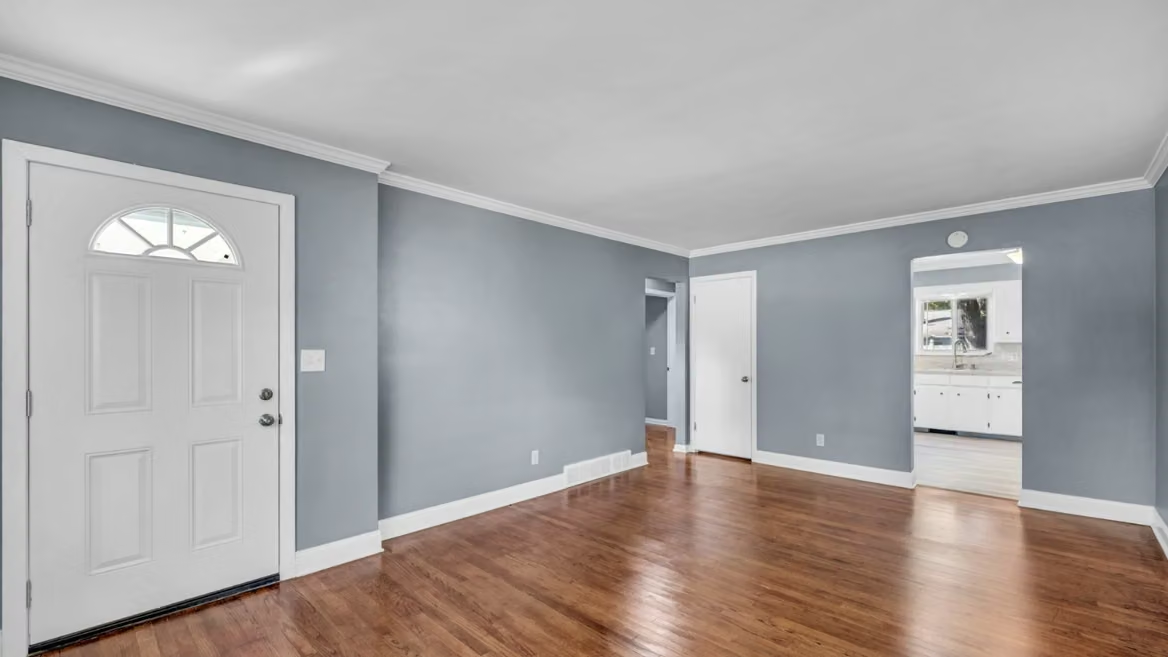
Assaulted at a showing, an open house or a meeting with a client? You did nothing wrong by doing your job, and you can talk to us at your own pace.
Real estate agents meet strangers in empty homes as a normal part of the job. When an agent is sexually assaulted at a showing, an open house or a client meeting, the person who did it is responsible, and a brokerage that ignored known risks may be too. You can Tell Us Your Story without a detailed account. Contacting us does not create an attorney-client relationship.
Real estate is built on meeting people you do not know, often alone and often in empty houses. Most clients are exactly who they say they are. Some are not. When an agent is sexually assaulted while working, the law looks first at the person who committed the assault. It can also look at the brokerage: what it knew about the risk, what safety steps it promised, and whether it acted on warnings. A realtor sexual assault lawyer can help you sort out which claims may fit your facts.
Why showings and open houses carry risk
The parts of the job that bring in business are the same parts that create exposure. In a 2024 National Association of Realtors survey of 1,423 agents, women were twice as likely as men to report a situation at work that made them fear for their safety1. The settings that come up again and again include:
- Private showings in vacant or secluded homes
- Open houses after other visitors leave
- First meetings with a client no one has verified
- Car rides between properties
- Late-evening appointments set by text or app
- Model homes and new-construction sites with no staff nearby
- Lockbox access to homes with poor cell service
- Repeat contact from a client who will not take no for an answer
None of this makes an assault the agent’s fault. It explains why a brokerage that sends agents into these settings may be expected to think about safety, and why its choices can matter in a civil claim.
Who may be responsible
Responsibility depends on the facts and on state law. It is never assumed; it has to be shown. Possible defendants include:
- The person who assaulted you. A client, a buyer posing as a client, a seller, a contractor or anyone else you met through the work is responsible for their own conduct.
- The brokerage. A brokerage may face negligence claims if it knew or should have known of a danger and failed to act, for example by ignoring an earlier report about the same client.
- The property owner or manager. Where an assault happened at a listed property, an owner or manager who controlled locks, lighting or access may have had duties related to security.
- A team or office that set the appointment. If a team lead or office staff booked the showing and skipped steps the office required, that choice may be part of the review.
Our guide to sexual assault and negligent security explains how premises security claims work in more detail.
What a brokerage may owe its agents
State licensing laws make brokers responsible for supervising the agents who work under their license. Arizona can discipline a broker who fails to exercise reasonable supervision over salespersons and others in the broker’s employ2. California makes the designated officer of a corporate broker responsible for supervising the corporation’s salespersons3. These rules are mostly about transactions, not personal safety, and a licensing complaint does not pay money to the person harmed.
Safety duties usually come from ordinary negligence law instead. A review may ask:
- Did the brokerage have a written safety policy, and did it follow it?
- Did it require agents to verify a new client’s identity before a first showing?
- Did it offer a check-in system, a buddy rule or a way to share the appointment address?
- Had anyone reported the same client, phone number or email before?
- Did the office push agents to take any appointment, at any hour, to hit targets?
- After you reported, did the brokerage help you, or did it cut your leads, your desk or your listings?
Independent contractor status and your options
Most agents sign independent contractor agreements, and federal tax law treats a licensed agent paid by commission under a written contract as a non-employee4. That label matters. Title VII, the main federal workplace harassment law, protects employees5, so an agent who is truly an independent contractor may not be able to bring a federal employment claim against the brokerage.
The label is not the end of the analysis. Other paths may still be open:
- California’s fair employment law makes it unlawful to harass a person providing services under a contract, if the person meets the law’s test for an independent business6.
- New York lets contractors and other non-employees hold an employer liable for discrimination in its workplace when the employer knew or should have known and failed to act7.
- California also allows a sexual harassment claim arising from a business or professional relationship, and real estate agents are on the statute’s list8.
- Negligence claims against a brokerage, an owner or a manager do not depend on whether you were an employee.
- California law says a broker’s and salesperson’s obligations to the public apply whether they call their arrangement employment or contracting9.
Some agents are employees in practice, whatever their paperwork says. If that is your situation, our page on workplace sexual assault explains how employer liability and agency charges work.
Arbitration clauses in agent agreements
Independent contractor agreements often include an arbitration clause. For sexual assault and sexual harassment disputes covered by a federal law passed in 2022, the person bringing the claim can choose not to be bound by a predispute arbitration agreement, and a court decides whether the law applies1011. Bring your agreement to a review, or describe it if you no longer have a copy.
Filing deadlines for a realtor sexual assault lawsuit
Every claim has a time limit, and some are shorter than people expect. The deadline that applies depends on your state, the type of claim and the facts of your situation.
Do not wait, and do not assume it is too late. Tell us your story as soon as you can, and we will look at the time limits that apply to you.
Records that may help
You do not need any documents to ask for a review. Keep what you lawfully have, and do not worry about what you do not have.
Records that may be useful
The appointment
- Texts, emails, call logs or app messages with the client
- The showing request, calendar entry or lead source
- Lockbox or showing-service access records, if you can get them
Your brokerage
- Your independent contractor or employment agreement
- Any safety policy, training material or check-in rules
- Messages showing what you reported and how the office responded
After the assault
- Names of anyone you told and when
- Medical or counseling records you choose to share
- Any police report or licensing complaint
Privacy when you contact us
You choose what to share. The form asks for your name, email and phone so we can reach you. The description box is optional, and you do not need to describe what happened in detail to ask for a review.
After you submit the form, a copy of what you sent is emailed to the address you enter. If someone else can read that inbox or your phone’s messages, consider leaving the description blank, using an email address only you can access, or calling us instead. You can use the description box to tell us the safest way and time to reach you.
We treat what you share with care. Even so, information you send through a website or email is not the same as a privileged attorney-client communication, and submitting the form does not create an attorney-client relationship or guarantee representation.
What happens after you contact CBW Law
How a review works
-
You reach out
Use the form or call. Share only what you are comfortable sharing. A short note, or none at all, is enough to start.
-
We talk at your pace
We ask a few questions about where and when it happened and who was involved. You can skip any question.
-
We look at the law that applies
We check the deadlines, your agreement with the brokerage, and the state and federal rules that may apply where it happened.
-
We explain your options
We tell you what we found and what we did not find. Deciding whether to take any step is up to you.
Showing a home is your job. Your safety was never part of the deal.
Plain English
Medical, Health & Insurance
Words you may see in agent agreements, medical records and court papers.
Real estate and legal terms
- Independent contractor agreement
- The contract most agents sign with a brokerage, which usually says the agent is not an employee4.
- Designated broker
- The licensed broker responsible for supervising agents who work under the brokerage’s license2.
- Negligent security
- A claim that someone who controlled a property failed to take reasonable steps against a foreseeable danger.
- Predispute arbitration agreement
- A clause, signed before any dispute, that sends future claims to private arbitration instead of court10.
Care after an assault
- Medical forensic exam
- An exam after a sexual assault that can treat injuries and collect evidence, done under state and local rules.
- Post-traumatic stress disorder (PTSD)
- A condition in which fear, stress or memories of a traumatic event continue long afterward and get in the way of daily life12.
- Victim compensation
- A state program that may repay some crime-related costs, such as medical care, counseling and lost wages13.
Questions
Frequently asked realtor sexual assault lawsuit questions
Short answers to questions agents ask. Every situation depends on its facts and the state where it happened.
I am an independent contractor. Can I still bring a claim?
Can my brokerage be responsible for what a client did?
Sometimes. It depends on what the brokerage knew or should have known, what safety steps it promised and whether it ignored warnings. It is never automatic.
I agreed to meet the client alone. Does that hurt my case?
Meeting clients alone is a normal part of the job. It does not make an assault your fault, and it does not by itself end a claim.
Do I need a police report?
No. A civil claim does not require a police report, a criminal charge or a conviction.
My agreement has an arbitration clause. Am I stuck with it?
Not always. For covered sexual assault and harassment disputes, federal law lets you choose court instead of arbitration11. A court decides whether the law applies.
Should I file a complaint with the state real estate regulator?
You can. A licensing complaint may lead to discipline, but it does not pay damages. It can run alongside a civil claim, and a lawyer can help you think about the order.
What if I left the brokerage?
Leaving does not end your claims. Deadlines keep running, so it helps to ask early.
How long do I have to file?
Every claim has a time limit, and it depends on your state and the facts. Contact us as soon as you can so a lawyer can check the deadline that applies to you.
Does contacting CBW Law mean I am filing a lawsuit?
No. It starts a conversation. It does not create an attorney-client relationship or guarantee representation.
Tell Us Your Story
If you were sexually assaulted while working as an agent, you can ask questions before deciding whether to report or file anything.
Tell us as much or as little as you want, and the safest way to reach you. Time limits apply, so it helps to reach out soon.
Submitting information does not establish an attorney-client relationship or guarantee that CBW Law will represent you. Every claim depends on its own facts and the law that applies.
Tell Us Your Story Call (800) 476-2416
This page is general information, not legal advice. Reading it or contacting CBW Law does not create an attorney-client relationship. Allegations described here are allegations unless a court or agency has made a finding. Laws and deadlines differ by state and change over time; state-specific statements were last verified on November 16, 2026. No outcome can be promised in any case. If you are in immediate danger, call 911.


